
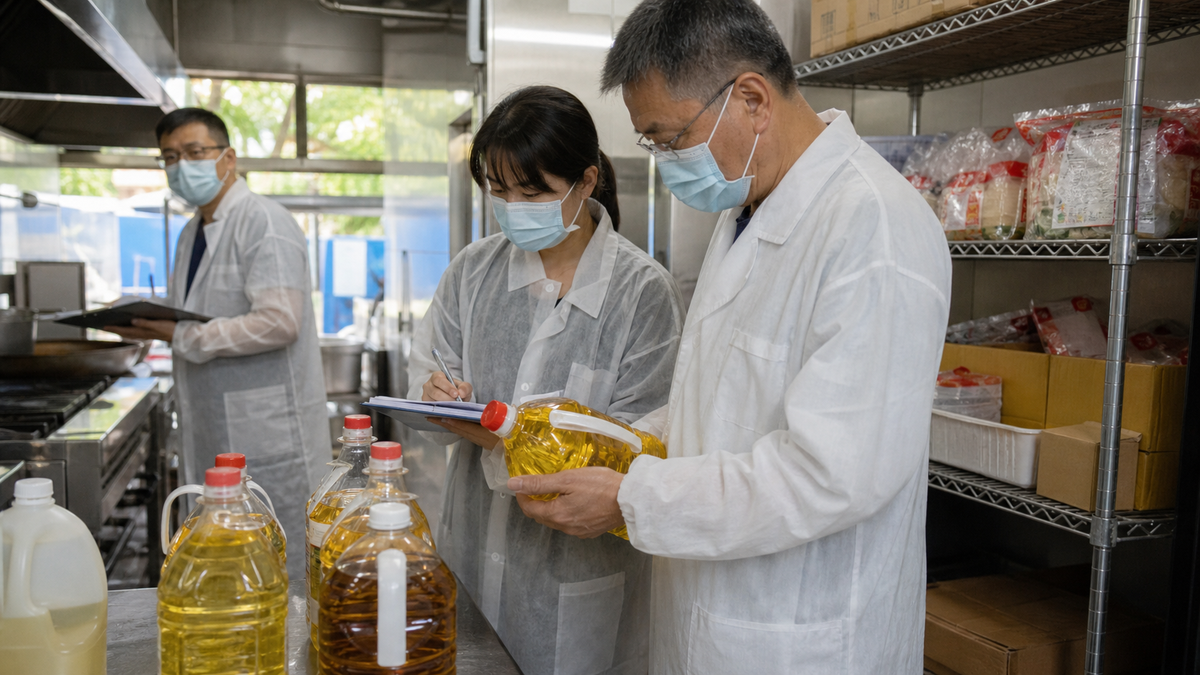
A contaminated cooking-oil recall has become a major political dispute in Taiwan after an opposition-led rally drew a large crowd to central Taipei on July 25. The immediate issue is soybean salad oil found with excessive benzo[a]pyrene, but the argument now extends to how quickly officials traced the products and which level of government bears responsibility.
The Kuomintang, or KMT, says the governing Democratic Progressive Party failed to protect consumers and disclose where affected oil went. The DPP says the opposition is turning a serious food-safety investigation into an election campaign and overlooking the role of local authorities.
A recall turns into a contest over responsibility
Taiwan’s Food and Drug Administration said a Taichung-based supplier detected excessive benzo[a]pyrene in a batch of soybean oil. The contaminant can form during high-temperature drying or processing. The company was fined NT$165.2 million for failing to report the problem promptly, and authorities ordered affected products recalled.
The central political question is what happened between detection and removal. Opposition speakers asked why oil had moved through processors, restaurants, shops and school-meal supply chains before the public received a full account. Organizers said more than 200,000 people joined the rally, while independent confirmation of that number was not available. It is safer to describe the gathering as tens of thousands or a very large crowd.
Taiwan’s public broadcaster PTS reported the opposition’s demands alongside Premier Cho Jung-tai’s call for discussion of proposed food-safety-law changes. A DPP legislator separately described an earlier KMT hunger strike as a political stunt.
Central and local narratives diverge
The KMT has placed responsibility on the DPP-led central government and linked the case to a wider record of food scares. The party is campaigning ahead of local elections scheduled for November, giving resignations, inspection rules and traceability immediate electoral weight.
DPP supporters point out that food inspection is shared with municipal governments and that Taichung, where the supplier is based, is governed by the KMT. That division makes the scandal difficult to reduce to one party’s failure. It also raises a substantive policy question about whether local testing, company self-reporting and central recall powers are joined effectively.
International coverage has focused heavily on the size and political significance of the protest. Channel News Asia reported both the KMT’s organizer estimate and the regulator’s account of the contaminated batch. TaiwanPlus placed the case in the context of earlier food-safety scandals, including the 2014 gutter-oil case.
What to watch
Consumers need a final traceability list showing which products and outlets received affected oil. Authorities also need to explain the timing of testing, company notification, recall orders and public disclosure. Those records will help separate verified regulatory failures from campaign claims.
The Legislative Yuan’s handling of proposed amendments to the Act Governing Food Safety and Sanitation will be the next policy milestone. Politically, the issue will be tested in Taiwan’s November 2026 local elections, when both the DPP and KMT will ask voters to assign responsibility.
Sources
- PTS News, Taiwan, rally and government response, Chinese.
- TaiwanPlus, Taiwan, food-safety background and protest coverage.
- Channel News Asia, Singapore, regulator findings and organizer estimates.
- Taiwan News, Taiwan, DPP response to opposition action.
This article was prepared with AI assistance and reviewed by a human editor. English- and Chinese-language sources were checked.