
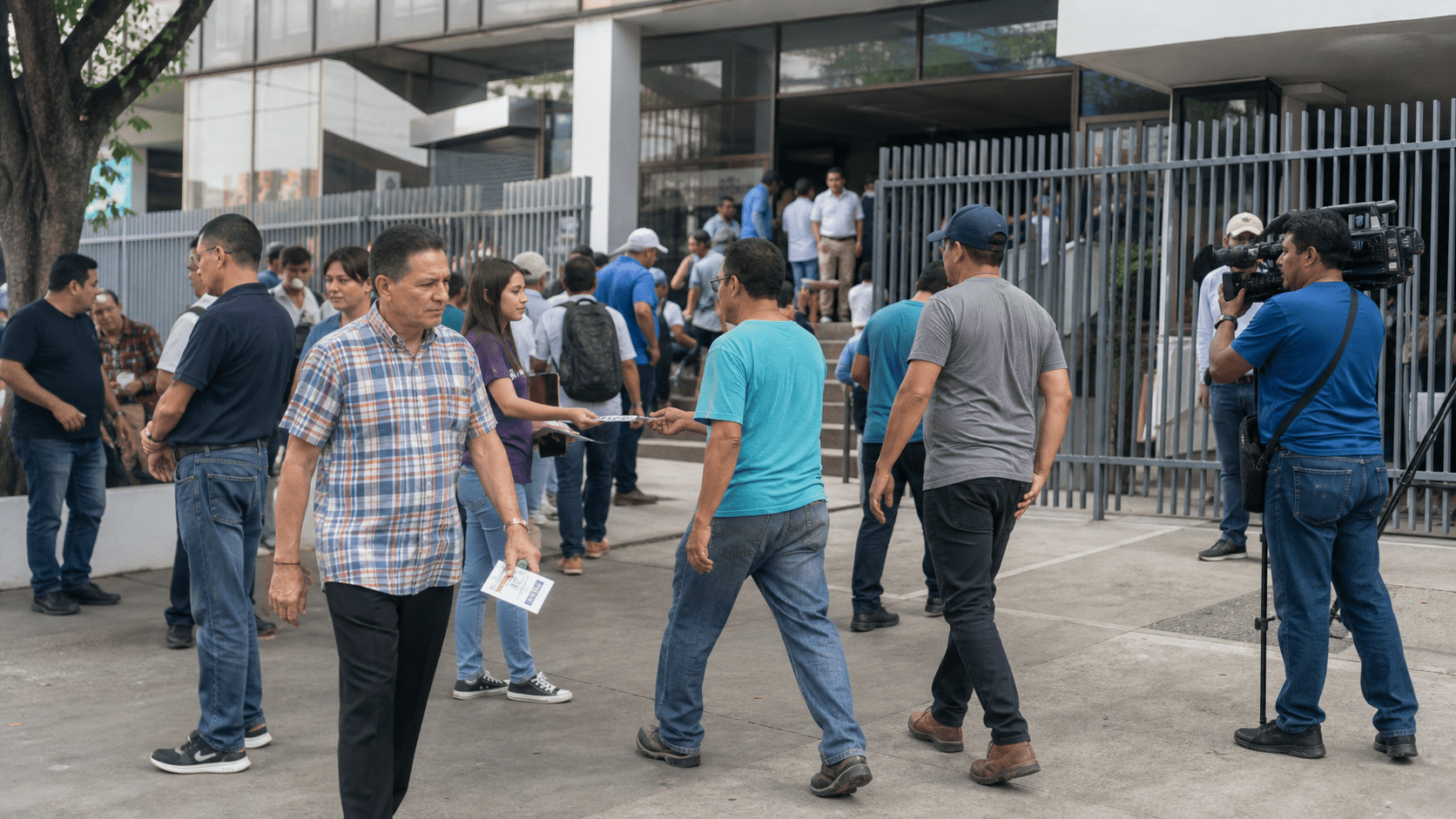
El Salvador’s ruling Nuevas Ideas party has ratified President Nayib Bukele’s candidacy for the February 2027 presidential election, with Vice President Felix Ulloa again named as his running mate. The decision clears the party’s internal hurdle for Bukele to seek a third consecutive term.
The bid follows constitutional changes approved by Bukele allies that removed presidential term limits. Supporters see a chance to continue a government they credit with a dramatic improvement in public security. Critics say the changes further weaken checks on executive power and make competition less meaningful.
At home, security gains and constitutional limits are argued together
The ruling party’s decision came after internal elections and was announced publicly on Monday. The Associated Press reported the ratification and noted Bukele’s high approval ratings as well as the legal objections raised by constitutional scholars.
Domestic debate cannot be reduced to a simple division between security and democracy. Many Salvadorans have experienced a sharp reduction in gang violence under the emergency security policy, while rights advocates, lawyers and affected families have challenged detentions, due process and the concentration of power. Both experiences shape how a third-term candidacy is received.
Spanish-language reporting has tracked the political groundwork for the candidacy. El Pais reported Bukele’s pre-candidacy filing and described the constitutional amendment that shortened the current term and opened a route to a further six-year mandate. The party’s ratification turns that earlier move into a live campaign question.
Outside observers are watching the regional precedent
International attention focuses on whether a highly popular government can alter constitutional guardrails while maintaining genuine electoral competition. Human-rights organizations have criticized the state of emergency and the treatment of detainees; Bukele’s government argues its policies restored safety after years of gang control.
The issue has resonance across Latin America, where leaders of different ideological traditions have sought reelection or changed term-limit rules. El Salvador’s case is distinctive because Bukele’s security model has gained attention well beyond the country, making the 2027 race a test of whether international admiration for lower homicide rates can coexist with sustained scrutiny of institutions.
Foreign coverage should also avoid assuming the election result. Bukele won his 2024 reelection by a large margin, but a new campaign will include opposition nominations, electoral administration and any court challenges to the rules now in force.
What to watch
The next milestone is the formal election calendar, including candidate registration and opposition nominations ahead of the February 2027 vote. Any constitutional challenge, electoral authority decision or change to campaign rules would be more consequential than early rhetoric.
Also watch cases and reporting on the state of emergency as campaigning develops. They will show whether security, due process and the treatment of detainees become central election issues alongside Bukele’s popularity.
Sources
- Associated Press, United States: party ratification, election timing and legal criticism.
- El Pais, Spain and El Salvador: pre-candidacy and constitutional changes, Spanish.
- Financial Times, United Kingdom: international political and institutional context.
- El Pais, Spain and El Salvador: current rights and detention context, Spanish.
This article was researched and drafted with AI assistance and reviewed by a human editor. Spanish- and English-language Salvadoran and international reporting were checked directly.