
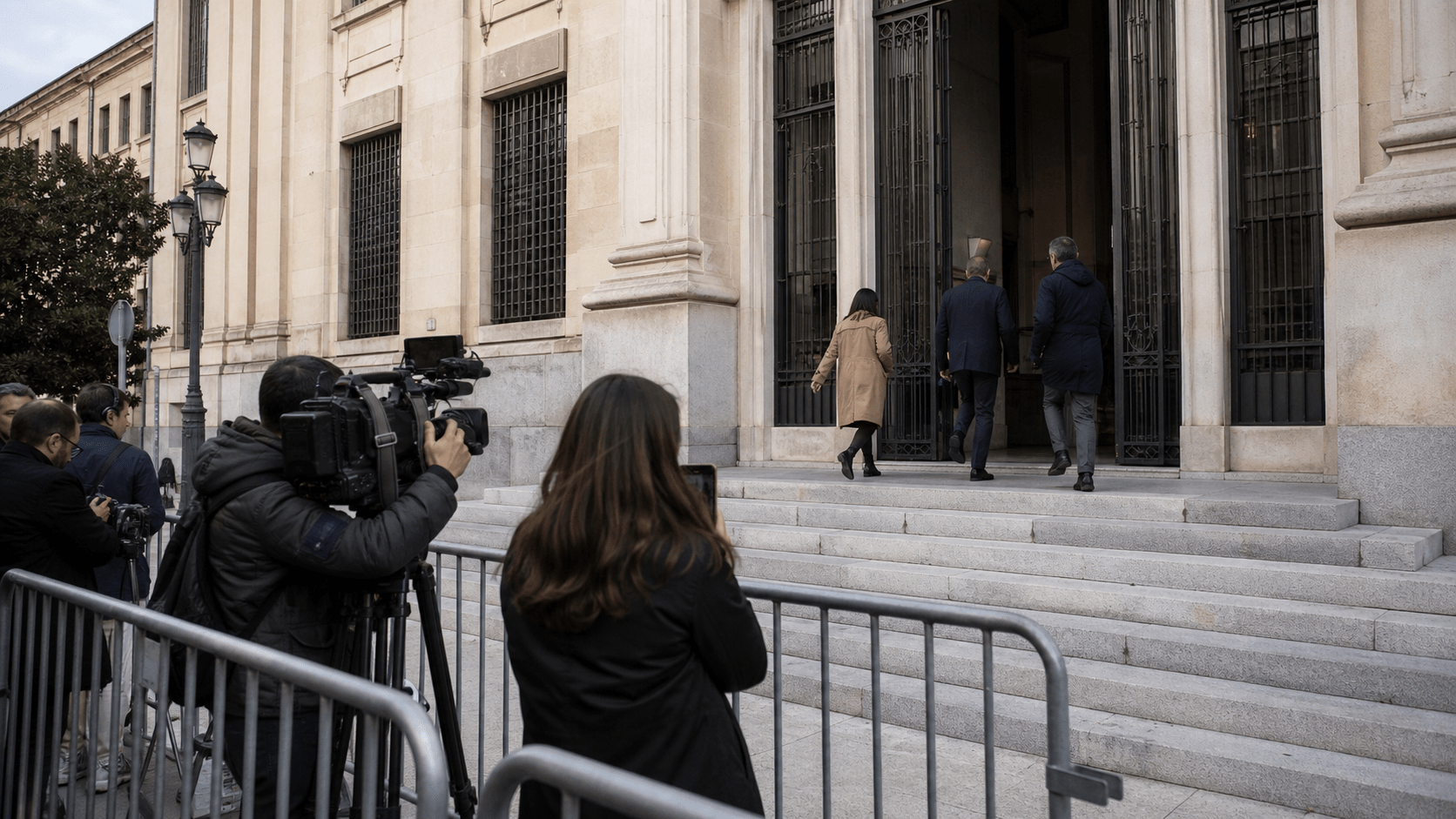
A court in Badajoz has convicted David Sanchez Perez-Castejon, brother of Spanish Prime Minister Pedro Sanchez, of administrative misconduct and barred him from public office and from standing for office for nine years. The ruling also imposed the same disqualification on Miguel Angel Gallardo, a former provincial president, over alleged irregularities in the creation and adaptation of a post at the Badajoz provincial government.
The judgment does not impose a prison sentence and acquitted David Sanchez of influence-peddling. But it immediately sharpened a wider political conflict in Spain, where opposition parties have portrayed investigations around the prime minister’s circle as evidence of a government under pressure and ministers have challenged the ruling.
The Spanish argument centers on the ruling, not a verdict on the government
The published Badajoz judgment, reported by El Pais, found administrative misconduct in the handling of the role. Spanish public broadcaster RTVE summarized the decision and its distinction between the conviction and the charge the court rejected.
That distinction is central to domestic coverage. The case concerns David Sanchez and provincial hiring decisions, not a criminal conviction of the prime minister. At the same time, the family connection gives it political weight that an ordinary public-administration case would not carry.
The government defended David Sanchez’s innocence and said the decision was unjust and unsupported by evidence, according to El Espanol’s account of ministers’ response. Opposition parties are likely to use the conviction to increase pressure on Pedro Sanchez, while an appeal process will test the legal reasoning rather than settle the political argument.
International readers see another test of institutional trust
Outside Spain, the story has been framed as part of a broader question about accountability around elected leaders. International outlets have highlighted the nine-year ban and the direct connection to the prime minister, but that framing can obscure the limits of the judgment: the court acquitted David Sanchez of one charge and imposed no prison term.
The case matters to European partners because Spain is a major EU government facing a sustained domestic fight over courts, investigations and political legitimacy. It is not evidence by itself that Spanish institutions have failed. It does show how legal decisions involving relatives of leaders can rapidly become tests of public confidence in both the judiciary and the executive.
The European comparison is also imperfect. Domestic political debates often turn a court decision into a referendum on the government. The next legal steps, and the government’s language about them, will determine whether the case remains a discrete provincial matter or becomes a lasting national issue.
What to watch
The immediate milestone is an appeal by David Sanchez and the other defendants. Court filings and any decision to suspend the disqualification while an appeal is considered will clarify the practical effect of the judgment.
Also watch parliamentary responses in Madrid and whether the ruling changes opposition strategy or coalition negotiations. The clearest factual developments will be formal appeals, the publication of related court reasoning and official statements, rather than partisan claims about the case.
Sources
- El Pais, Spain: published ruling and the court’s disqualification decision, Spanish.
- RTVE, Spain: public broadcaster’s account of the judgment, Spanish.
- Agencia EFE, Spain: sentence details and case background, Spanish.
- The Guardian, United Kingdom: international account of the ruling and political context.
This article was researched and drafted with AI assistance and reviewed by a human editor. Spanish-language court reporting and international coverage were checked directly.