
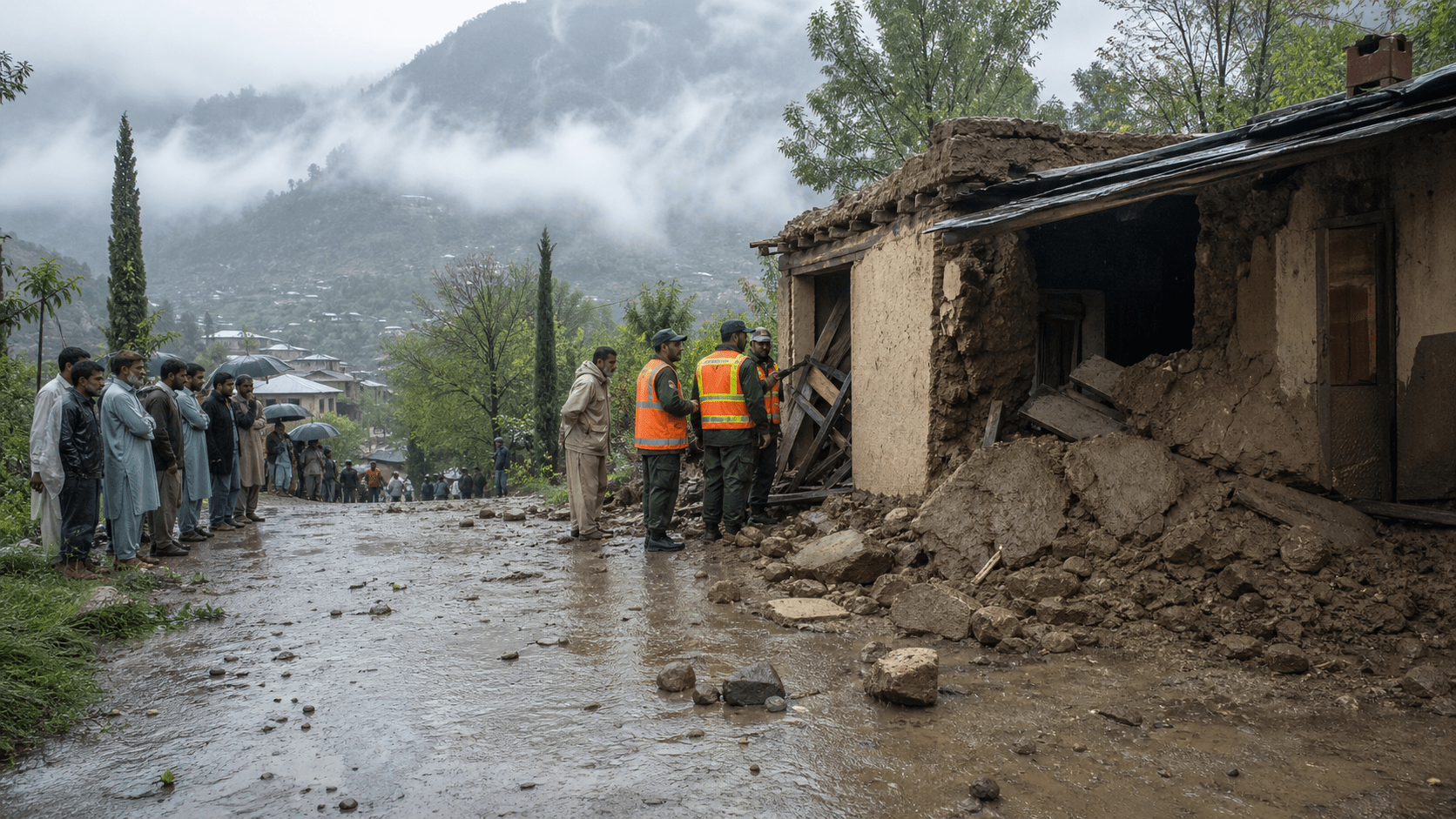
Heavy rain collapsed the roof of a mud-brick home in Kohat district of Pakistan’s Khyber Pakhtunkhwa province overnight, killing 11 people, according to police and provincial rescue officials. Most of those killed were women and children, and authorities said landslides also blocked roads and damaged homes in Gilgit-Baltistan.
The deaths are a local tragedy, but they arrive at the start of a period when Pakistan’s annual monsoon tests whether early warnings, safer housing and emergency services can reduce familiar risks. The government has advised tourists not to travel in northern areas because of possible landslides and flash flooding.
For Pakistan, the immediate story is protection before the next downpour
Pakistan’s disaster risk is not limited to major river floods. Rain can bring down vulnerable roofs, cut mountain roads and isolate villages before a large-scale emergency is declared. The Associated Press reported the Kohat deaths after provincial emergency officials recovered the victims and returned them to relatives.
Local authorities are managing two connected problems: an individual household collapse in Kohat and weather-related disruption farther north. That makes reliable district-level warnings and clear travel advice as important as national forecasts. It also means a death toll may change as rescue services reach areas affected by landslides.
Pakistan’s National Disaster Management Authority has documented how monsoon losses accumulate through floods, rain-related accidents and disrupted access to services. Its 2025 post-monsoon review provides the recent official context for provincial planning, although it does not determine the cause of this week’s deaths.
Outside attention returns to a longer climate and resilience question
International coverage of Pakistan’s monsoon often focuses on the catastrophic 2022 floods, which submerged large areas of the country and killed more than 1,700 people. That history explains why a smaller incident is being watched beyond Kohat: it is an early indicator of how exposed communities may be as seasonal rain intensifies.
The comparison needs care. No evidence links this roof collapse to a particular climate trend, and it should not be used to predict a repeat of 2022. The international relevance lies in the practical question of whether disaster preparation reaches homes, roads and mountain settlements before hazards become national emergencies.
For neighboring countries and aid organizations, Pakistan’s experience also matters because monsoon impacts cross administrative boundaries through mountain routes, rivers and regional supply chains. The most useful outside contribution is support for forecasting, resilient construction and locally led response, rather than treating every severe rain event as a single national catastrophe.
What to watch
Watch the next Pakistan Meteorological Department and provincial disaster-management bulletins for July 15 and 16, especially any escalation of heavy-rain, landslide or flash-flood alerts in Khyber Pakhtunkhwa and Gilgit-Baltistan. Officials may revise casualty and damage figures as access improves.
A second milestone is whether authorities announce targeted shelter, road-clearance or housing-safety measures for the affected districts. Those actions will show whether the response stays limited to rescue work or shifts toward reducing exposure ahead of the next rain band.
Sources
- Associated Press, United States: Kohat deaths, rescue response and northern travel warning.
- National Disaster Management Authority, Pakistan: official 2025 monsoon review and preparedness context.
- ReliefWeb, international: Pakistan emergency reporting and response updates.
This article was researched and drafted with AI assistance and reviewed by a human editor. English-language Pakistani official material and international reporting were checked directly.