
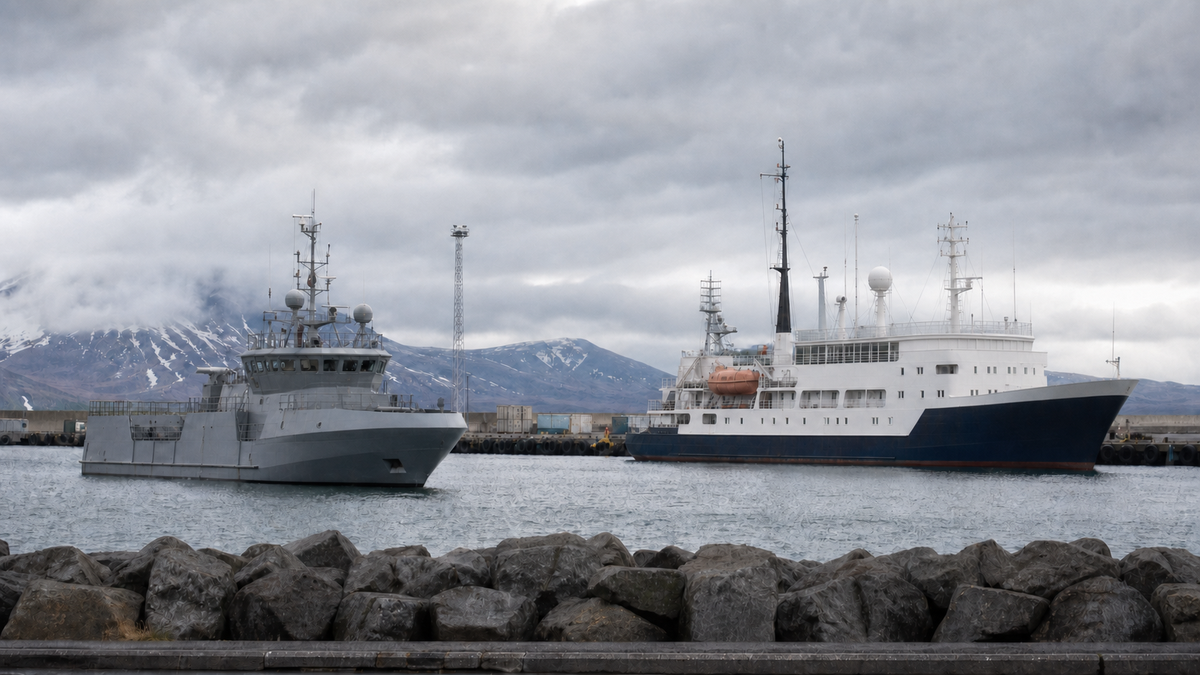
Icelandic authorities have seized the anti-whaling vessel Bandero and detained its 21-member crew after a confrontation involving the commercial whaling ship Hvalur 9. The Icelandic Coast Guard said the protest vessel ignored orders to leave Icelandic waters and later to stop its engines.
Coast guard personnel and members of the police special-forces Viking Squad boarded the vessel around midnight on July 30. The ship reached Reykjavík the following day, and police took over the investigation. Anti-whaling campaigner Paul Watson, whose foundation operates the vessel, was not aboard.
Iceland describes a maritime safety operation
The Coast Guard said Hvalur 9 requested assistance because its crew believed their safety was threatened by Bandero. According to Associated Press reporting, authorities said Bandero did not comply with instructions to depart and then failed to obey an engine-stop order.
The operation followed weeks of preparation and surveillance. Icelandic outlet Vísir reported in Icelandic in June that the Coast Guard had required the ship to report its position after it entered Iceland’s exclusive economic zone. The agency said position reporting was first and foremost a safety measure.
Later, the patrol vessel Þór followed Bandero with police special-forces personnel and Coast Guard specialists aboard. When the protest vessel remained outside Iceland’s territorial sea, officials said their legal power to expel it was limited, although they continued monitoring. Vísir reported that Þór eventually moved to other duties while aircraft and other assets remained available.
The boarding marks a significant change from observation to enforcement. Police now have to establish what happened between the two vessels, which orders were issued, whether they were legally binding and whether any conduct amounted to a criminal offense. Detention during an investigation does not by itself establish guilt.
Activists describe an effort to stop whaling
The Captain Paul Watson Foundation says it sent Bandero to disrupt Iceland’s commercial fin-whale hunt. The group said the vessel had been seized and that 21 crew members were held aboard without their phones. Its account frames the encounter as direct action intended to prevent whales from being killed.
Iceland Monitor reported that the ship returned to Icelandic waters on July 22 after leaving for Ireland because a crew member needed medical attention. The Coast Guard had maintained heightened readiness during the earlier visit.
Icelandic authorities and whaling supporters have emphasized threats to crews and the risk of interference between vessels. Justice Minister and Coast Guard comments reported before the boarding said officials had prepared for several scenarios. They described their responsibility as protecting life and safety at sea, including the safety of the foreign activists.
The foundation and Icelandic authorities therefore begin from sharply different descriptions of the same conduct. One side calls it intervention against a harmful industry; the other treats close maritime interference and refusal to obey navigation orders as a safety and law-enforcement matter.
Whaling divides Iceland and its international audience
Iceland is one of only three countries, with Norway and Japan, that still permit commercial whaling. The industry has domestic supporters who defend a lawful national decision and object to foreign activists attempting to stop licensed vessels. Iceland also has environmental groups and citizens who oppose the hunt or question its economic value.
Outside Iceland, coverage often centers on Watson’s long history of confrontational anti-whaling campaigns. That can obscure the country’s internal debate and the separate legal question raised by the boarding. A person can oppose commercial whaling while believing protest vessels must follow maritime orders, or support direct action while questioning the hunt’s legitimacy.
The legal setting also has multiple zones. An exclusive economic zone gives a coastal state resource and regulatory rights but is not identical to territorial waters. Authority depends on location, vessel registration, navigation rules and the conduct alleged. The police investigation will need to identify where each relevant act occurred and which Icelandic or international rules apply.
What to watch
The immediate milestone is whether Icelandic police release the crew, seek extended detention or announce charges. Authorities also need to state whether the ship remains under seizure and what evidence was collected from its navigation and communications systems.
Watch for competing video, tracking and radio records from Bandero, Hvalur 9 and the Coast Guard. Those records may establish the distance between the vessels, the sequence of orders and the conduct that led the whaling crew to request assistance.
The wider dispute will continue with the 2026 whaling season. Any attempt by another activist vessel to approach the fleet, or any court challenge to the seizure, will test how Iceland balances lawful protest, maritime safety and its decision to allow commercial whaling.
Sources
- Associated Press, international, boarding, detention and accounts from authorities and the foundation.
- Vísir, Iceland, position reporting and Coast Guard explanation, Icelandic.
- Vísir, Iceland, surveillance and operational readiness, Icelandic.
- Iceland Monitor, Iceland, Bandero’s return and earlier Coast Guard posture.
- Iceland Review, Iceland, earlier monitoring and the campaign’s stated objective.
This article was prepared with AI assistance and reviewed by a human editor. English- and Icelandic-language sources were checked.