
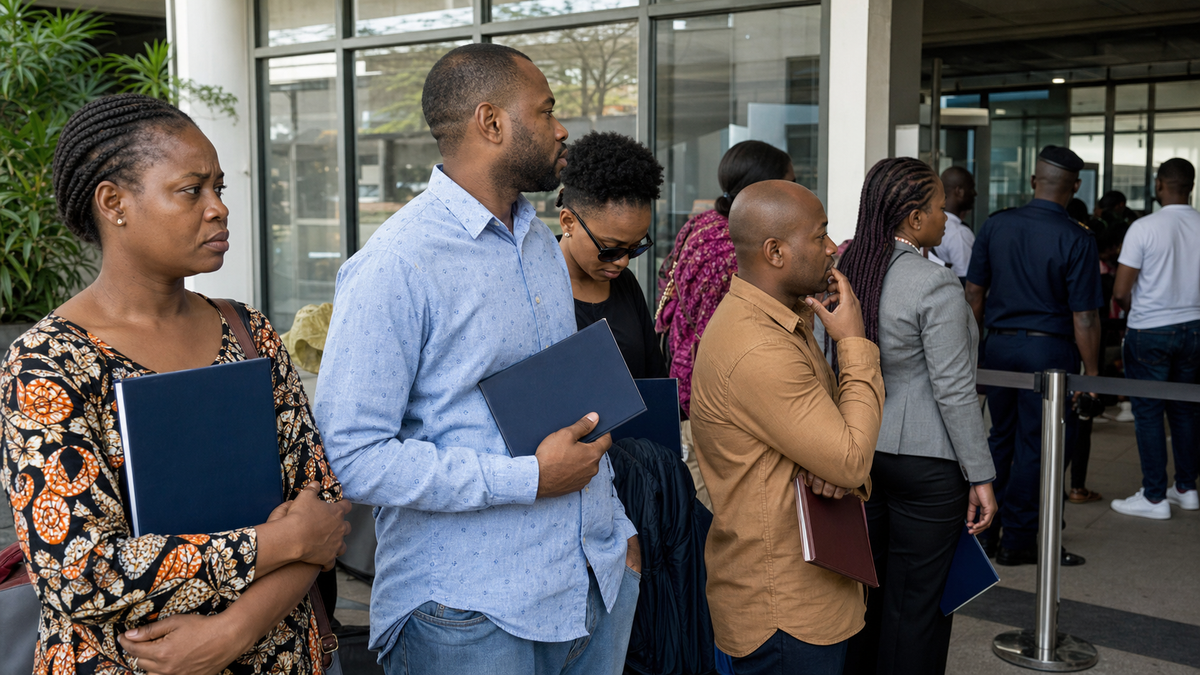
The United States is making its visa-bond program permanent on August 3, requiring some applicants from designated countries to post $10,000, $15,000 or $20,000 before a qualifying visitor visa can be issued. The list contains 50 countries and is concentrated heavily in Africa.
The bond is not an additional visa fee and does not guarantee admission to the United States. It is meant to be canceled and returned when a visa is denied or when a traveler complies with the bond conditions, including leaving on time. Even so, having to place as much as $20,000 out of reach for the duration of a trip can make an otherwise lawful family, business or tourism visit financially impossible.
Washington points to fewer overstays
The permanent rule replaces a pilot launched in August 2025. Under the final Federal Register rule, consular officers may impose the bond on otherwise eligible applicants for B-1 business, B-2 tourism or combined B-1/B-2 visas. Countries may be added on a rolling basis with at least 15 days’ notice.
The State Department says countries can be designated because of high overstay rates, gaps in information sharing or concerns about identity verification, screening and travel documents. An officer sets the bond at one of three amounts. The permanent system removes the pilot’s $5,000 option and raises the maximum from $15,000 to $20,000.
US officials describe the pilot as effective. According to figures in Associated Press reporting, nearly 45,500 visitors from the affected countries overstayed in 2024, while fewer than 50 overstays were recorded during the pilot’s first 10 months. Those figures do not show only a change in traveler behavior, however. They also reflect a sharp fall in the number of visas issued.
The department initially expected about 2,000 applicants to face a bond. Roughly 20,000 were covered, nearly half did not post the money, and issuance of business and tourist visas to nationals of listed countries fell 83 percent. The rule itself says the department expects demand for those visas to remain lower.
A refundable bond can still close the door
Most countries on the State Department’s current list are in Africa. The policy therefore has a geographically unequal effect even though its legal criteria are framed around overstay and vetting data rather than a single region.
For an applicant, the central distinction is between eventually getting the money back and being able to produce it now. South African travel publication Travel News described the bond as one of several barriers depressing US travel demand. The requirement can be particularly difficult for people visiting relatives or pursuing small-business opportunities without access to inexpensive credit.
The process also carries practical limits. The final rule says bonded travelers generally must enter and leave through commercial airports, including approved preclearance locations. There is no applicant-initiated procedure for seeking a waiver, although senior consular officials may waive a bond for national or humanitarian reasons.
That distinction matters because the policy is not a blanket ban. Some applicants will post the bond, travel and receive the money back after complying. Others may decide not to apply, abandon the process after being notified of the amount, or be unable to lock away the required sum.
Visa access across Africa is changing at the same time
The bond rule is arriving alongside a separate reorganization of US visa services in Africa. Effective August 1, routine processing from a long list of posts is being shifted to designated regional hubs. Applicants may therefore face both a large financial requirement and longer journeys to reach the appropriate consular location.
The State Department says regional hubs should produce more consistent screening and adjudication. From an African traveler’s perspective, consistency does not remove the cost of transport, accommodation, missed work or the bond itself. The domestic US debate is therefore about compliance and enforcement, while the international effect is measured in who can still afford to make a lawful trip.
What to watch
The first milestone is implementation after the rule takes effect on August 3. Watch for updated consular instructions explaining how the new $10,000, $15,000 and $20,000 levels apply to applicants already in the process, and whether the public country list changes after the required notice period.
The next test will be the program’s published results. Visa-issuance totals, the share of eligible applicants who decline to post a bond, cancellation and refund times, and verified overstay figures will show whether the permanent rule primarily changes compliance or primarily reduces access.
Sources
- Federal Register, United States: final rule, bond amounts, criteria, waivers and compliance conditions.
- US Department of State, United States: current list of countries and applicant instructions.
- Associated Press, international: pilot-program results and impact on visa issuance.
- Travel News, South Africa: African travel-industry cost context.
- US Department of State, United States: August 1 realignment to African regional hubs.
This article was prepared with AI assistance and reviewed by a human editor. English-language US official, African and international sources were checked.