
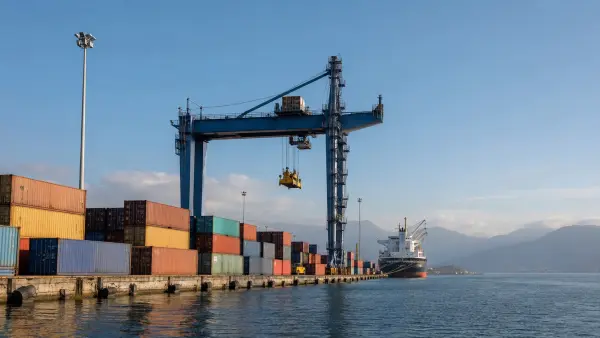
Modern sanctions are mostly not embargoes against countries. They are lists of named people, companies, banks, ships and aircraft, and the legal effect of being on a list is that anyone within the sanctioning state’s jurisdiction is barred from dealing with you and must freeze any of your assets they hold. Enforcement runs through banks and compliance departments rather than through police, which explains both why sanctions bite quickly and why they leak so persistently.
The core distinction to hold onto is between what a sanction legally prohibits and what it causes in practice. Those are rarely the same thing, and most confusion in coverage comes from treating them as identical.
Designation, and what a listed person actually loses
A designation is an administrative act. An agency determines that a person or entity meets criteria set out in a statute or executive order, adds them to a list, and the prohibitions follow automatically. In the United States that list is the Specially Designated Nationals list run by the Treasury’s Office of Foreign Assets Control, which holds well over 17,000 entries.
The volume has grown sharply. Treasury said in May 2026, when it removed 76 outdated entries as part of a modernisation effort, that annual new listings had risen from 880 in 2017 to over 3,000 in 2024. It also acknowledged the compliance cost of a bloated list, with firms spending resources chasing low-risk false positives.
United Nations sanctions work differently. The Security Council establishes a regime by resolution under Chapter VII, and a committee of all 15 Council members administers it, usually adding names by consensus. The Council has run 31 sanctions regimes since 1966 and currently has 15 active. Consensus is a high bar, which is why UN lists are short and national lists are long.
Primary and secondary sanctions
Primary sanctions bind the sanctioning state’s own people and companies. A US primary sanction tells US persons what they may not do. That is unremarkable jurisdiction, and every state does it.
Secondary sanctions are the consequential ones. They threaten to cut off a foreign firm from the sanctioning state’s market or financial system because of conduct that happened entirely outside it and was legal where it occurred. A bank in a third country that processes payments for a designated Russian or Iranian entity has broken no local law, but it may find its US correspondent accounts closed.
The leverage here is not moral or diplomatic. It is that most cross-border trade is invoiced in dollars, and dollar payments clear through the US banking system. A bank that loses correspondent access loses the ability to move dollars, which for most institutions is not survivable. This is why an American designation reaches further than a comparable European one, and why sanctions have become a focus of arguments about the dollar’s role that have nothing to do with the target country.
Overcompliance does more work than compliance
The largest practical effect of a designation is usually not the prohibition itself. It is that banks facing unclear rules, large penalties and thin margins stop serving whole categories of customer rather than assess each one.
This is called de-risking. A bank that would need expensive expertise to distinguish a permitted transaction with a Somali remittance firm from a prohibited one will often exit Somali remittances entirely. Nothing in the sanction required that, and the affected customers were never designated. The rule produced a commercial calculation, and the calculation produced the outcome.
The same dynamic explains why aid organisations report payment problems in sanctioned countries even where the law explicitly permits their work. The bank is not applying the sanction. It is avoiding the cost of determining whether the sanction applies.
The humanitarian carve-out, and its limits
In December 2022 the Security Council adopted Resolution 2664, which created a standing exemption from UN asset freezes for funds and goods needed to deliver humanitarian assistance. The vote was 14 in favour with India abstaining, India having argued that such carve-outs can be exploited by groups it regards as terrorist. Resolution 2761, two years later, made the carve-out indefinite for the ISIL and Al-Qaida regime, and the European Union transposed the exemption into its own regimes.
On paper this solved the problem. In practice the carve-out reaches the legal prohibition but not the de-risking behaviour, because a bank’s reluctance was never grounded in the prohibition. A permission that a compliance officer must interpret is still a cost, and the officer’s incentives are unchanged.
This gap between the legal position and the operational one is the single most common source of error in sanctions coverage. A report that a measure “exempts humanitarian goods” is describing the statute, not the shipment.
What the research shows about whether they work
The foundational dataset is Hufbauer, Schott and Elliott’s Economic Sanctions Reconsidered, first published in 1985 and expanded in later editions to cover more than 200 sanctions episodes from 1914 onward. It found a success rate of roughly 34 percent, counting cases where sanctions contributed to at least partial achievement of stated goals.
Robert Pape’s 1997 rebuttal in International Security reworked the same cases and put the figure closer to 5 percent, arguing that many coded successes were driven by military force or credible threats of it rather than by economic pressure. The exchange that followed never resolved the underlying problem, which is that establishing what caused a state to concede is extremely hard. A CIDOB review of the field describes the causality question as still open.
Two findings from the later literature are more useful than the headline percentages. Daniel Drezner’s work indicates that sanctions succeed more often at the threat stage than after imposition, because a state that was going to concede often does so before absorbing the cost. And Thomas Biersteker’s study of UN targeted sanctions found much higher success rates for constraining and signalling than for coercion, meaning sanctions are better at making something harder or registering disapproval than at forcing a change of policy.
Why the same measure reads three ways
Sanctions coverage divides predictably by position, and each framing is describing something real.
From the sanctioning state, the measure is pressure short of war, and the relevant question is whether the target changes behaviour. From the target state, it is economic warfare against a civilian population, and the relevant question is who actually bears the cost. Research on the humanitarian effects of broad sanctions programmes supports parts of that objection, which is one reason the field moved toward targeted designations in the first place.
The third position is the one that English-language coverage most often drops. From a country that is neither sender nor target, the objection is jurisdictional: a foreign state is regulating its companies. The European Union has repeatedly told the UN General Assembly that it rejects extraterritorial coercive measures while simultaneously running its own sanctions programmes, a position its critics call inconsistent and its officials distinguish on the ground that EU measures do not reach foreign firms operating abroad. India’s abstention on the humanitarian carve-out came from yet another direction. None of these are the sender-versus-target argument, and a story that only has two sides in it has usually left this one out.
What to read to check a claim
OFAC publishes the SDN list, its recent actions and its civil penalties record directly, so a claim that a specific company was sanctioned on a specific date is verifiable in minutes. The Security Council publishes each sanctions committee’s list and its panel of experts reports, which are the best available open-source accounts of how evasion actually works in a given regime.
For effectiveness claims, the two things to check are which dataset a figure comes from and how that dataset codes success. A statement that sanctions work a third of the time and a statement that they work one time in twenty are frequently drawn from the same 200-odd cases.
How Much Did You Understand?
Test yourself on the mechanisms in this article with the short quiz below.
Sources
- UN Security Council on sanctions (US, United Nations), English
- UN meetings coverage of Resolution 2664 (US, United Nations), English
- US Treasury on sanctions modernisation (US, government department), press release, English
- OFAC recent actions (US, Treasury sanctions administrator), primary record, English
- CIDOB on evaluating sanctions success (Spain, research institute), English
- Pape, Why Economic Sanctions Do Not Work (US, International Security journal article), English
- EU statement on extraterritorial measures (Belgium, European External Action Service), English
- IPI Global Observatory on Resolution 2761 (US, policy institute), English
This post was produced with AI assistance and human editorial review. It draws on primary UN and US Treasury material and on the peer-reviewed sanctions literature rather than on news accounts. Designation counts change continuously and are accurate as of mid-2026; the effectiveness figures are contested and are reported here as a dispute rather than a settled finding.