
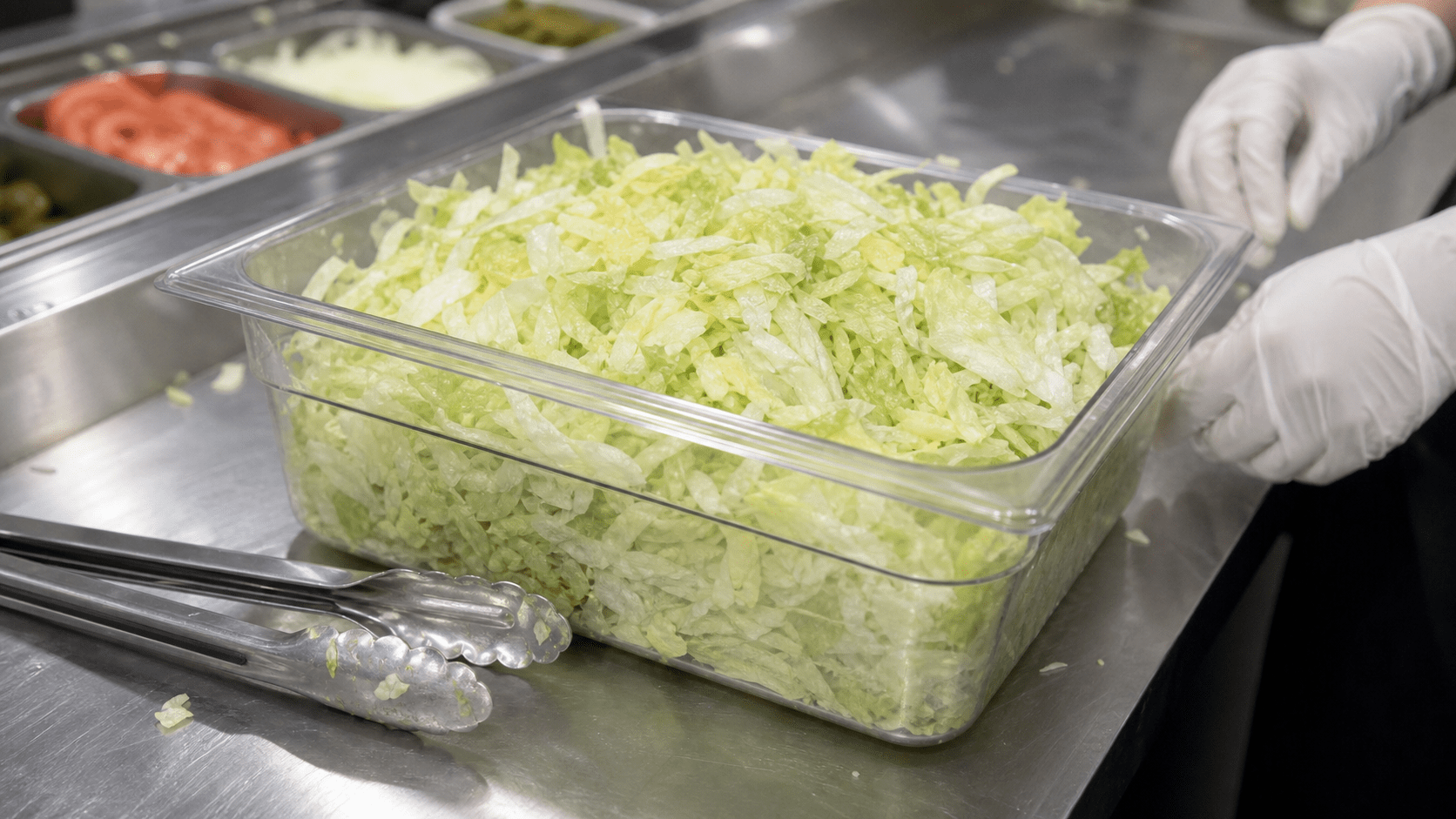
US health officials have linked a five-state outbreak of cyclosporiasis to shredded iceberg lettuce from Mexico served at some Taco Bell restaurants. The Food and Drug Administration said on July 16 that 1,644 people in Indiana, Kentucky, Michigan, Ohio and West Virginia had been identified in the outbreak, with 94 hospitalizations and no reported deaths.
Illnesses began between May 13 and July 13. Among 190 patients whose food exposures Michigan officials analyzed, 90 percent reported eating iceberg lettuce. The FDA said its traceback work converged on a single supplier of Mexican lettuce used by locations where people became ill, but the investigation has not yet established where or how the lettuce became contaminated.
Taco Bell committed to stop using lettuce from the supplier. Taylor Fresh Foods said it was voluntarily removing all iceberg lettuce sourced from central Mexico from the US market, according to the Associated Press. Federal officials cautioned that other restaurants, brands, retailers or distribution channels could still be identified.
What cyclosporiasis does
Cyclosporiasis is an intestinal illness caused by Cyclospora cayetanensis, a microscopic single-celled parasite. It reaches people through food or water contaminated with human feces. Because the parasite normally needs at least one to two weeks outside the body to become infectious, the Centers for Disease Control and Prevention says direct person-to-person spread is unlikely.
Symptoms usually begin about one week after exposure, although the range can be from two days to two weeks or longer. The main symptom is watery diarrhea that can be frequent and sudden. Loss of appetite, weight loss, stomach cramps, bloating, gas, nausea and fatigue are also common, while some infected people have no symptoms.
Untreated illness may last from a few days to more than a month, and symptoms can disappear and return. Diarrhea can lead to dehydration, and people with weakened immune systems may have a longer or more severe illness. The standard treatment is the antibiotic combination trimethoprim-sulfamethoxazole, and the CDC advises people with symptoms to contact a healthcare provider because diagnosis requires stool testing that may need to be requested specifically.
Why fresh produce can carry the parasite
Cyclospora differs from bacteria and viruses that cause many foodborne outbreaks. Humans are its only known host, and infected people can shed the parasite in feces before it matures in the environment. Contaminated irrigation water, sewage, sanitation failures or food-contact surfaces are possible routes to produce, but officials do not yet know which route was involved in this outbreak.
Washing fruits and vegetables under running water remains good food-safety practice, but it cannot guarantee removal of Cyclospora. Common chemical sanitizers also may not kill it. The FDA’s current advice is more direct: consumers should avoid shredded iceberg lettuce from Mexico served at Taco Bell locations in the five named states while the investigation remains active.
Why the case totals look confusing
The five-state lettuce investigation is not the same as the total number of US cyclosporiasis cases this season. As of July 13, the CDC’s national surveillance count listed 1,645 laboratory-confirmed domestically acquired cases in 34 states, 141 hospitalizations and no deaths. That total includes clusters under investigation as well as cases not connected to a common source.
State figures can be higher because states may include probable cases and receive reports before the CDC does. Federal data also lag illness onset, and people who recover without testing are not counted. The CDC separately listed 440 cases associated with travel outside the United States, which are not part of the domestically acquired total.
How the outbreak is being viewed outside the US
Mexico’s National Epidemiological Surveillance System issued a travel notice about the US outbreak before the lettuce source was confirmed, according to Spanish-language reporting by El Pais. Other coverage in Mexico and Spain has emphasized that the traced lettuce came from Mexico and that the supplier withdrew product from the US market.
That geographic detail matters for traceback, but it is not yet proof that contamination occurred on a Mexican farm. The FDA says product sampling and work with the supplier are continuing. The distinction matters because the same product can move through growing, processing and distribution stages before reaching a restaurant.
What to watch
The FDA is testing samples, screening implicated products more closely at the border and tracing whether the lettuce reached businesses beyond the identified Taco Bell locations. Its next outbreak update could add states, brands, restaurants or distribution channels, or narrow the advisory if investigators determine the full scope.
The CDC has said it will update national data more frequently during the surge. Watch for its next surveillance total, the FDA’s next five-state outbreak notice, and any finding that identifies the contamination point. People who ate the implicated lettuce and develop symptoms within roughly two weeks should contact a healthcare provider and mention possible Cyclospora exposure.
Sources
- US Food and Drug Administration (United States, English): outbreak scope, traceback, public advice and investigation status.
- Centers for Disease Control and Prevention (United States, English): 2026 national surveillance figures and reporting limitations.
- Centers for Disease Control and Prevention (United States, English): transmission, symptoms, diagnosis and treatment.
- Associated Press (United States, English): supplier response and wider US outbreak context.
- El Pais (Spain/Mexico, Spanish): Mexico’s travel notice and regional framing.