
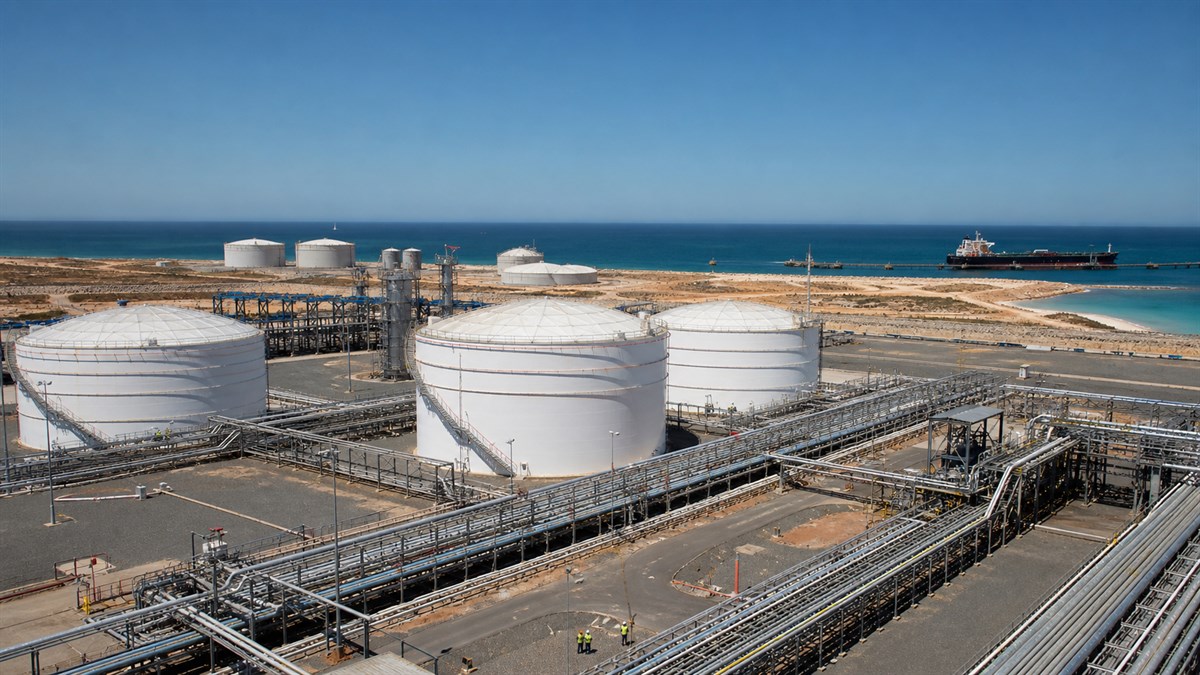
Australia’s federal and Western Australian governments will spend A$4 million on a pre-feasibility study for what could become the country’s first new large oil refinery since the 1960s. The announcement responds to fuel-supply anxiety caused by the Middle East war, but it is an investigation, not approval to build.
Perth-based industrial company Perdaman proposed the facility and would construct it if the project proves viable. The location, capacity, cost, timetable and financing model remain undecided. Officials said the study will compare possible sites in Western Australia.
Australia weighs resilience against cost and transition risk
Prime Minister Anthony Albanese presented the study as a way to strengthen national resilience and fuel sovereignty. ABC News reported that potential locations include Geraldton, Perth, Bunbury and Collie, while ministers said northern Western Australia could also make sense. No preferred site has been selected.
Australia now has two operating refineries, at Lytton in Queensland and Geelong in Victoria. Western Australian officials argue that a third facility on the west coast could reduce the vulnerability of a vast state located thousands of kilometres from existing refining capacity. Mining, farming, freight and aviation still depend heavily on liquid fuels.
The refinery study forms part of a broader federal fuel package. A government summary lists a strategic reserve, higher minimum stockholding requirements, support for the two remaining refineries and feasibility work on expanded domestic capacity. Those measures address different risks: stored fuel helps during a short disruption, while refining capacity is meant to offer a longer-term industrial capability.
Critics question whether a new refinery would solve the problem claimed for it. Australia would still need crude oil suitable for the plant, much of it imported, so domestic processing would not remove exposure to maritime chokepoints or global prices. SBS News highlighted warnings that the project could be expensive, slow and potentially stranded as electric vehicles reduce petrol demand.
The economic history is sobering. Six of Australia’s eight refineries closed between 2003 and 2021 as large Asian plants achieved lower costs. A new plant would therefore need to show not only that it can operate technically, but that its security benefit justifies any public support required to keep it commercially viable.
The international shock behind a domestic industry debate
The latest proposal cannot be separated from disruption in the Middle East. Reuters reported that reduced overseas supply and more vulnerable oil markets helped push Canberra toward the study. Yet a refinery takes years to plan and build, so it cannot relieve the current shortage or immediately lower pump prices.
Australia’s position also contains a striking contradiction for international readers. It is a major energy exporter, particularly of coal and liquefied natural gas, while relying heavily on imported refined petroleum products. The mismatch reflects the difference between possessing energy resources and maintaining the particular industrial plants needed to turn crude into petrol, diesel and aviation fuel.
The international comparison will matter to the study. Any business case must consider the scale and efficiency of Asian refineries, shipping costs, crude compatibility, emissions rules and future transport demand. It will also have to separate strategic value from the promise of complete fuel independence, which the proposed facility could not provide on its own.
What to watch
The first milestone is the pre-feasibility report. It should identify a preferred site, indicative capacity, crude supply, product mix, capital cost and the public support Perdaman would seek. Environmental approvals and community consultation would come later if governments choose to proceed.
Watch for disagreement between fuel-security and climate-policy objectives. A refinery could protect supplies during future shocks, but public investment in long-lived petroleum infrastructure may face resistance if the business case assumes decades of high liquid-fuel demand.
The next concrete decision will follow completion of the jointly funded A$4 million study. Until then, Australia has committed to examining a refinery, not to constructing one.
Sources
- ABC News, Australia: project scope, possible sites and domestic refining context, English.
- Prime Minister of Australia, Australia: official fuel-resilience package and feasibility funding, English.
- Reuters via EnergyNow, United Kingdom/Canada: announcement, government rationale and market context, English.
- SBS News, Australia: criticism of the proposal’s economics and import dependence, English.
- Guardian Australia, Australia: political and fuel-market background, English.
This article was prepared with AI assistance and human editorial review. English-language Australian official, public-service, domestic and international reporting was checked.