
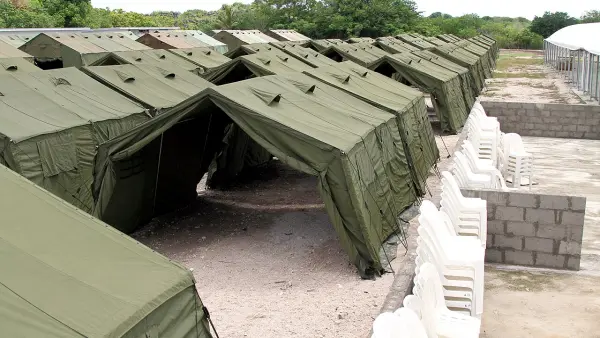
Nearly every asylum seeker interviewed for a new report on Nauru says they cannot afford enough food, even though Australia continues to spend heavily to keep the offshore system that is meant to support them running. The report, Hungry for Freedom, was published by the Asylum Seeker Resource Centre (ASRC) on the 13th anniversary of Australia’s decision to reopen offshore processing on Nauru, and its release coincides with Commonwealth spending connected to the policy running close to A$900 million in the past financial year. It draws on interviews with 78 of the roughly 91 asylum seekers living in community accommodation there, plus a review of health records.
Of those interviewed, 99 percent said their fortnightly allowance of A$260, about A$18 a day, was not enough to buy sufficient food. Eighty-two percent said they lacked easy access to free, clean drinking water, and more than two-thirds rarely or never had fresh fruit, vegetables or meat. People described skipping meals, losing significant weight and surviving on rice, dry biscuits or discarded food. They are barred from working and depend entirely on the government payment for everything from groceries to phone credit, according to the original ABC Australia reporting.
This group is separate from Nauru’s other Australian-linked cohort, roughly 350 former immigration detainees deported there under a 2025 deal signed after a High Court ruling made indefinite detention unlawful. That arrangement carries its own cost, an upfront payment plus tens of millions annually for three decades. Combined with the older asylum-processing contracts, the two schemes make Nauru one of the most expensive pieces of Australian immigration policy per person. The Guardian calculated that offshore processing cost more than A$9 million for each of the roughly 100 people still on the island last year, once contractor payments and facility upkeep are counted in.
A defended policy already under review
The Department of Home Affairs stands by the current arrangement. It says people on Nauru have access to accommodation, healthcare and financial assistance, that support payments are reviewed regularly, and that Australia continues working with Nauru’s government toward permanent resettlement, according to SBS News, which also interviewed an asylum seeker identified only as George. Speaking through a translator, George described catching fish to supplement his food and said he wanted Australians to understand that the money spent on Nauru “is rarely spent on us.”
ASRC deputy chief executive Jana Favero rejected the government’s characterization, arguing the department’s public statements do not reflect what people on the ground are describing. She called the spending “an outrageous sum of taxpayer money” going to private contractors while the people Australia sent to Nauru go hungry.
The report lands weeks after a separate Senate inquiry, prompted by corruption allegations around Nauru contracts, delivered its own findings. The Legal and Constitutional Affairs References Committee report, tabled on 2 July, recommended greater transparency and accountability in offshore contracts but stopped short of recommending the policy end. Greens Senator David Shoebridge, who had pushed for the inquiry, filed a dissenting report calling for offshore processing and third-country resettlement arrangements to be wound up entirely. Charities including the St Vincent de Paul Society said the majority findings did not grapple with the scale of harm described in submissions.
Where Nauru sits in its own arrangement
Independent coverage of conditions on Nauru is thin by design: journalists are rarely granted access to the island, and most of what reaches wire services still passes through Australian reporting rather than reporting produced on Nauru itself. No major international outlet outside Australia had picked up the Hungry for Freedom findings as of this writing, leaving the debate largely contained to Canberra’s press gallery and the advocacy groups pushing back against it.
Nauru’s own position in the arrangement complicates the “where is the money going” question the report raises. Hosting Australian-funded processing has previously accounted for roughly two-thirds of Nauru’s government revenue, Reuters has reported, meaning the same deal that funds a system asylum seekers describe as failing them also underwrites much of the Nauruan state budget. Little of the roughly A$786 million contract Australia holds with its Nauru-based contractor, cited in Senate Estimates figures, appears to reach individuals directly, since it covers facilities, security and welfare services rather than personal allowances.
The arrangement also carries a legal dimension beyond either government’s public statements. The UN Human Rights Committee found in January 2025 that Australia remains responsible for people it transfers offshore, rejecting the idea that outsourcing processing to Nauru also outsources accountability, according to a statement from the UN human rights office. Australia’s record was raised again this year at the UN’s Universal Periodic Review in Geneva, where several member states called for offshore detention to end.
What to watch
The federal government has not yet issued a formal response to the Senate committee’s 2 July report. Under standard Senate practice, government responses to committee reports are due within three months of tabling, which would put Canberra’s answer sometime in the coming months. Whether that response addresses the allowance rate and contract transparency, rather than only process and oversight, will show how far the new hunger findings have registered.
The corruption allegations that triggered the Senate inquiry in the first place have not been resolved, and further hearings, an anti-corruption commission referral, or fresh reporting on the contractor arrangements could keep the financial side of the story moving independently of conditions on the ground. Advocacy groups including the ASRC have said they intend to keep pressing the government on the allowance rate specifically, arguing it has not kept pace with the cost of importing food to the island.
Specific things to watch: the government’s formal response to the 2 July Senate committee report; whether Home Affairs adjusts the A$260 fortnightly allowance following the ASRC findings; any further action on the corruption allegations tied to Nauru’s offshore contracts; and the next round of Senate estimates hearings, where the value of the Nauru contracts and the number of people still on the island are traditionally itemized in detail.
Sources
- Asylum Seeker Resource Centre (ASRC), Australia, refugee legal and advocacy service, publisher of the Hungry for Freedom report
- ABC Australia, Australia, national public broadcaster
- SBS News, Australia, public multicultural broadcaster
- The Guardian Australia, Australia, Australian edition of a UK-founded newspaper
- Parliament of Australia, Legal and Constitutional Affairs References Committee, Australia, Senate committee
- Refugee Council of Australia, Australia, refugee policy research and advocacy body, citing Senate Estimates
- Reuters, international wire service
- Office of the UN High Commissioner for Human Rights (OHCHR), international, UN human rights body
This post was produced with AI assistance and human editorial review. Persian-language sources were searched given the historical presence of Iranian asylum seekers in Australia’s offshore system, but no native-language reporting on the July 2026 ASRC findings surfaced, only older, unrelated coverage of past incidents on Nauru and Manus Island. Characterizations in this piece rely on English-language Australian, Pacific and international reporting.