
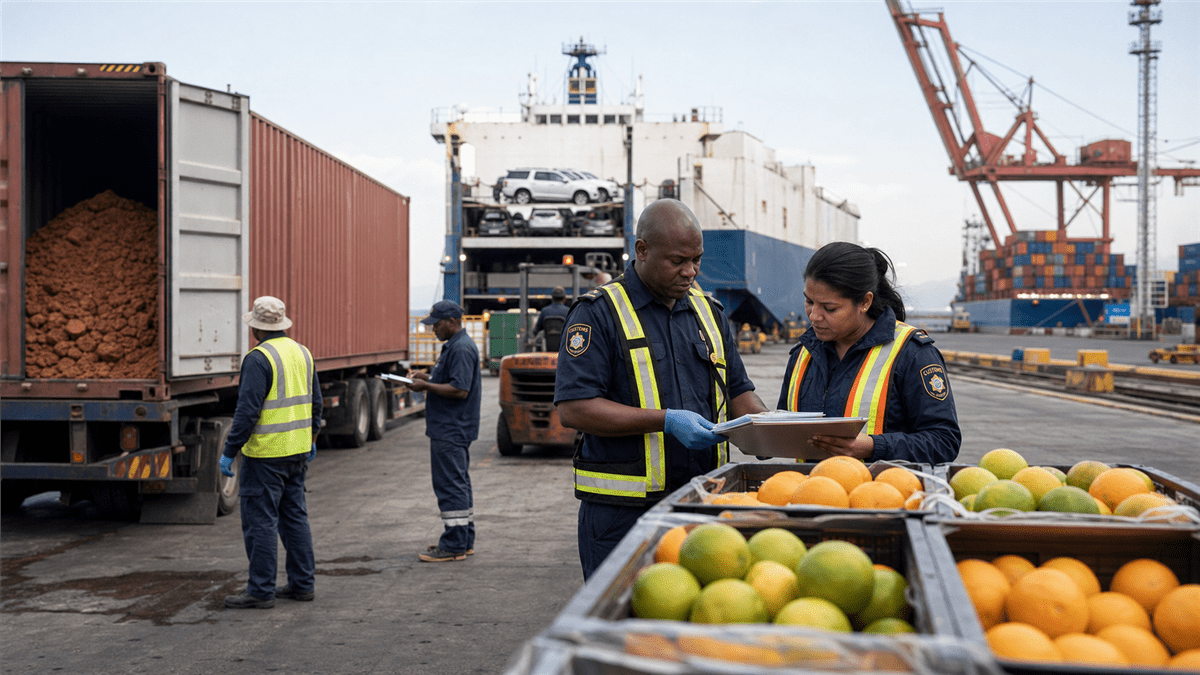
South Africa has asked the United States to exempt its exports from a proposed 12.5% tariff tied to Washington’s investigation of forced-labor import controls. A South African delegation made its case at a July hearing before the Office of the U.S. Trade Representative, arguing that the country prohibits forced labor, has ratified key international conventions and can block goods made with prison labor.
If Washington rejects a countrywide exemption, Pretoria wants carve-outs for platinum-group metals, vehicles, citrus, seafood, wine and nuts. The dispute matters beyond those sectors because it turns on a legal distinction with growing importance in global trade: banning forced labor inside a country is not necessarily the same as preventing goods made with forced labor elsewhere from entering its market.
Pretoria says its laws meet the standard
South Africa’s Department of Trade, Industry and Competition says the country complies with domestic and international obligations on forced labor. In its June response to the U.S. findings, the department pointed to South Africa’s ratification of International Labour Organization conventions and legislation addressing forced labor.
At the hearing, the delegation argued that the proposed penalty was unsupported by evidence connecting the country’s principal exports to forced labor. South African outlet News24 reported the two-level request: full exemption first, followed by product-specific relief if the United States proceeds with the tariff.
Trade Minister Parks Tau has said the United States remains an important partner and that engagement will continue across several disputes, including U.S. duties on steel, aluminum and automobiles. That broader context raises the stakes for exporters. A new across-the-board tariff would sit alongside existing trade frictions rather than arrive as an isolated labor-rights measure.
Pretoria’s position is not that forced labor is unimportant. It is that Washington has misread South Africa’s legal framework and selected a remedy that would punish unrelated industries. The requested product list reflects that argument: the government says there is no evidence that those exports are made with forced labor and contends that adding costs to them would not improve enforcement.
Washington is testing imports, not only workplaces
The U.S. investigation applies a different test. In June, USTR identified 54 economies, including South Africa, that it said had failed to impose and effectively enforce a prohibition on imports of goods produced with forced labor. Six more economies were judged to have a prohibition but to enforce it inadequately.
USTR proposed an additional 12.5% duty for economies it considers to lack an effective import ban and 10% for those with a prohibition or partial regime. The office says weak controls let forced-labor goods evade restrictions, lower costs for offending firms and undermine producers that do not use coercive labor. Its case is therefore about border enforcement and supply chains, not simply whether South African employers may legally compel labor.
That difference explains why the two governments can cite labor protections and still disagree. South Africa emphasizes constitutional protections, employment law and treaty commitments. The United States asks whether customs authorities have a specific, enforceable mechanism to identify and stop imported goods linked to forced labor before they circulate through the economy.
The international implications are wide because South Africa is one of 60 economies in parallel Section 301 investigations. A tariff remedy based on another country’s import controls would extend U.S. trade pressure beyond products directly alleged to contain forced labor. Other investigated governments and multinational suppliers will be watching whether exemptions depend on existing statutes, practical enforcement or new commitments to Washington.
What to watch
The next concrete deadline is Thursday, July 16, when additional post-hearing submissions are due, according to the Associated Press account. South Africa can use that filing to document customs powers, enforcement practice and the case for exempting either the country or particular products.
USTR’s final action will reveal whether it keeps the proposed 12.5% rate, lowers it, accepts product exclusions or credits new enforcement commitments. The reasoning will matter as much as the number because it could establish what Washington expects from trading partners facing similar investigations.
Exporters should also watch for sector-specific treatment of vehicles, minerals and agriculture, along with any renewed negotiation over wider U.S.-South Africa trade tensions. A narrowly drawn exemption could protect key industries without resolving the underlying disagreement over what constitutes an effective forced-labor import ban.
Sources
- Department of Trade, Industry and Competition, South Africa: official response and legal position.
- News24, South Africa: hearing request, proposed rate and export carve-outs.
- Associated Press, United States and South Africa: delegation’s case, affected products and next deadline.
- Office of the U.S. Trade Representative, United States: official findings and proposed tariff structure.
- USTR investigation docket, United States: notices, submissions and procedural record.
This article was researched and drafted with AI assistance and reviewed by a human editor. English-language South African and U.S. government and news sources were checked directly.