
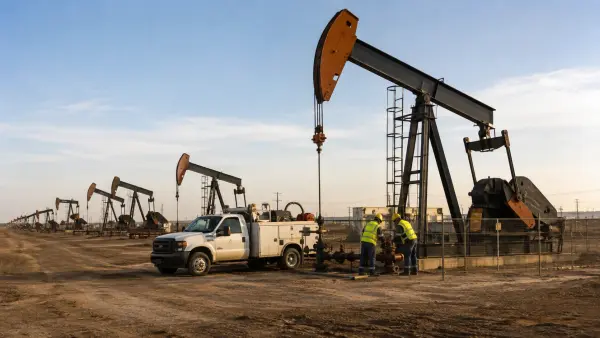
President Donald Trump announced on Friday, August 28, 2026, that the United States had secured what he called “THE BIGGEST OIL DEAL IN WORLD HISTORY” with Venezuela, giving the US “majority control” of more than 65 billion barrels of the country’s proven oil reserves. Venezuela’s interim government, led by Delcy Rodríguez, described the same agreement in nearly opposite terms four days later, when the National Assembly formally endorsed it as ratifying “the full sovereignty and inalienable ownership of the Venezuelan state over its resources.”
Both descriptions are technically defensible, because the deal’s actual structure sits between them. It is not a US government acquisition of Venezuelan oil. It is a 25-year, 100-year-lease arrangement built around a private company, and the details that have emerged since Trump’s announcement complicate both the triumphant American framing and the sovereignty framing Caracas has offered in return.
What the deal actually does
The concessions, covering 17 oil fields with a proven potential of 65 billion barrels, were granted to North American Blue Energy Partners, known as NABEP, a privately held company headquartered in Barbados with Venezuelan operations. According to a White House fact sheet published three days after Trump’s announcement, the US Department of War’s Office of Strategic Capital will hold a 35% stake in the venture, while NABEP retains operating control and is expected to seek up to $100 billion in financing to rehabilitate Venezuela’s oil infrastructure. Washington will not directly own the oil in the ground.
The company itself has drawn scrutiny. NABEP is controlled by Alejandro Betancourt López, a 46-year-old Venezuelan businessman who faces open money-laundering investigations in Spain and Switzerland, according to reporting reviewed for this piece. Founded in April 2024, NABEP grew from roughly 18,000 barrels a day in production to approximately 200,000 in just two years, a jump that has not been explained in detail in any official document reviewed. Most of the fields the company will now operate had previously been held by Russian and Chinese firms or by allies of the former Maduro government, according to the same reporting.
The view from Washington
Secretary of State Marco Rubio called the agreement a “great victory” that would help bring down fuel costs for Americans, which have risen amid the ongoing war with Iran. Independent energy analysts quoted in the same Spanish-language coverage were more cautious, and noted that any effect on prices at the pump would likely take time to materialize. Contacted by AFP, the major US oil companies did not respond to requests for comment on the announcement, and fuel distributors and refiners were separately scheduled to meet with Trump the following Tuesday to discuss pump prices directly.
Trump’s framing of the deal is consistent with remarks he made in January 2026, shortly after US forces captured then-president Nicolás Maduro. Asked by the New York Times how long the United States might maintain direct oversight of Venezuela’s oil, Trump said, “I’d say a lot longer,” and described plans to “rebuild it in a very profitable manner,” adding that the US would “use oil and we’re going to get it.” He did not, at the time, explain why his administration had recognized Rodríguez rather than opposition leader María Corina Machado as Venezuela’s new leader.
The view from Caracas, and the dissent inside it
Venezuela’s National Assembly backed the deal on Tuesday, September 1, in a vote that combined chavista support with what Spanish-language wire service EFE described as dissent from within the opposition rather than unified backing. Deputy Miguel Pérez Abad, who introduced the resolution, called it the most important agreement in a century and said it would generate an estimated 3.6 million direct and indirect jobs.
Opposition to the deal did not come only from Rodríguez’s traditional opponents. In Caracas, chavista sectors themselves protested the agreement, according to Cuban outlet CiberCuba, while the broader opposition movement described it as a predatory surrender of sovereignty. US Representative María Elvira Salazar, a Cuban-American Republican, initially criticized the deal on the grounds that Rodríguez was “the wrong person to sign it” and warned Venezuela was “just buying time,” before reversing course days later to call it “a great deal for the United States and the Venezuelan people,” conditioning her support on the eventual holding of free elections.
The deal also carries a quieter geopolitical consequence. Since Maduro’s capture, Venezuela has halted the roughly 35,000 barrels a day of oil it previously sent to Cuba under barter arrangements. The new agreement, according to CiberCuba’s reporting, makes that cutoff permanent and situates it within what the outlet frames as a reassertion of the Monroe Doctrine, the 19th-century US policy asserting hemispheric primacy over outside powers’ influence in the Americas.
What to watch
The most concrete near-term test is whether NABEP’s rapid, unexplained production growth draws formal scrutiny, particularly given Betancourt’s open legal exposure in two European jurisdictions. Whether that scrutiny affects the company’s ability to raise the $100 billion in financing the deal envisions is a direct financial question with a clear yes-or-no answer over time.
The Cuba angle is worth tracking as a separate thread: whether Havana responds formally to the permanent loss of discounted Venezuelan oil, and whether that shift registers as a deliberate lever of US policy or simply an incidental byproduct of the wider deal. Domestically, whether the chavista protests against the agreement, an unusual split within Rodríguez’s own political base, produce any lasting friction is worth watching separately from the opposition’s more predictable objections.
Next specific milestones: any US government disclosure of NABEP’s ownership structure or financing sources; the outcome of Tuesday’s meeting between Trump and US fuel distributors and refiners on pump prices; further developments in Betancourt’s money-laundering cases in Spain and Switzerland; and whether Cuba issues any formal statement on the permanent loss of its Venezuelan oil imports.
Sources
- NBC News (United States), on Trump’s initial announcement
- NPR (United States), on the deal’s ownership percentages and political context
- Al Jazeera (Qatar), on Venezuela’s production potential and the deal’s undisclosed structure at announcement
- FDD’s Long War Journal (United States, policy institute), on the White House fact sheet and NABEP’s stake structure
- NPR (United States), on skepticism about the deal’s effect on US gas prices
- CiberCuba (Cuba, Spanish-language), on Betancourt’s legal exposure, the Cuba oil cutoff, and domestic Venezuelan political reaction
- Semana (Colombia, Spanish-language), on Rubio’s remarks and the meeting with US fuel distributors
- Infobae, via EFE (Argentina/Spain, Spanish-language), on the National Assembly vote and its sovereignty language
- Diario de Cuyo (Argentina, Spanish-language), on Trump’s January 2026 remarks to the New York Times