
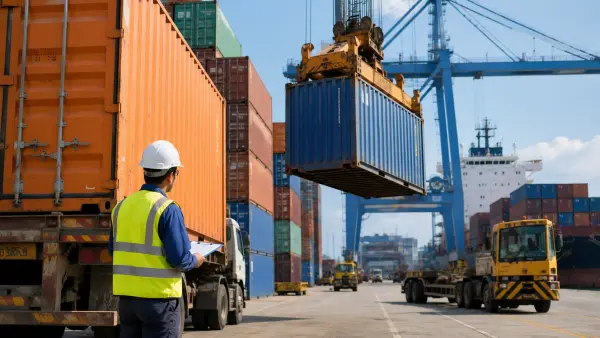
Trade negotiations between the United States and Canada collapsed late on Friday, August 21, 2026, minutes before a midnight deadline, and 50% US tariffs on roughly $20 billion of Canadian goods took effect at 12:01 a.m. Saturday. Canadian Prime Minister Mark Carney announced his government would impose matching retaliatory tariffs starting September 8, and at a Saturday press conference in Ottawa, when asked why it felt like Canada was “going to war,” he answered: “Because we were attacked.”
The breakdown came just three days after Trump had paused the same tariffs, writing on social media that the two countries “have a DEAL!” No further talks are currently scheduled. The reversal, from announced deal to collapsed talks to tariffs in force, took less than a week.
Two accounts of the same collapse
Both governments moved quickly to assign blame, and their accounts, while not directly contradictory on the facts, describe very different priorities. Carney told reporters Saturday: “In recent days, the United States proposed new terms that were uneconomic, unfair, and undermined the net benefits for Canada, and called into question the reliability of any deal. In short, they asked too much, and they offered too little.” He said Washington’s terms would have made Canadian production “more uneconomic over time.”
US Trade Representative Jamieson Greer, in a statement posted within hours of the deadline, said “Canada declined to finalize the trade deal under the terms agreed earlier this week,” and described an American offer that included tariff reductions on steel, aluminum and autos, supply chain coordination on aerospace, critical minerals cooperation, and the announcement of formal Canada-US-Mexico Agreement renegotiation talks. He said Canada’s “new demands and walk backs of other commitments” had upended a carefully balanced package. Speaking to CNBC three days later, Greer placed the origin of the dispute further back, saying the clash “started” with Canada’s own retaliatory restrictions on US alcohol, autos and dairy sales, introduced in 2025 after earlier rounds of Trump tariffs.
One specific sticking point, reported by both CBC and NBC, was Washington’s request that Canadian provinces lift their bans on selling American alcohol, a request several premiers had not committed to answering even as the week’s talks intensified. President Trump, posting on Truth Social after the deadline passed, framed the breakdown in blunter terms: “Canada wants the benefits of being a State, without being one!!! They have also charged our great farmers, for many years, massive amounts of Tariffs. No more!!!”
A federal-provincial front that held together this time
The most notable domestic shift from the previous week is how unified Canada’s response became once talks actually collapsed. Ontario Premier Doug Ford, who had avoided public comment on the negotiations for days, broke his silence Saturday with pointed color: “I’m glad he didn’t sign that deal because it was a bad deal,” Ford said, adding that Trump “is the type of person that would steal your lunch money the first day. He’d steal the tuque off your head the second day and the third day he’d steal your running shoes. He is not to be trusted whatsoever.” Manitoba Premier Wab Kinew said Ottawa should “fight” rather than concede further.
Quebec’s posture changed most visibly. Days earlier, Premier Christine Fréchette had said she was still “analyzing” Ottawa’s request to lift the province’s ban on American alcohol sales, and had told reporters she lacked enough information to say whether any emerging deal was good for Quebec. After the collapse, she struck a fully different tone. At a Saturday press conference in Montreal, Fréchette said “the United States has chosen confrontation,” and announced Quebec would not return American alcohol to provincial liquor-store shelves “as long as the Americans wage this war,” and would continue penalizing US companies in Quebec’s public procurement contracts. Alongside Economy Minister Bernard Drainville, she unveiled two new financial support programs for Quebec businesses exposed to the tariffs, saying in a formal statement that entrepreneurs and workers “cannot be asked to carry the weight of this uncertainty alone.” Bloc Québécois leader Yves-François Blanchet separately called on Carney to formally brief opposition party leaders in the House of Commons on the state of negotiations, a request made before the collapse that gained new urgency once talks actually failed.
What’s actually being taxed
The US tariffs that took effect Saturday apply to roughly 5% of Canada’s annual exports to the US, covering goods including hockey sticks, cement, building materials, wine and other liquors, and certain clothing categories, according to Associated Press reporting carried by PBS. Canada’s planned retaliation, set for September 8, is broader in its targeted sectors: steel, dairy, appliances, agricultural equipment, pulp, paper and electronics, according to CNN and The Week. The steel and aluminum sector, concentrated heavily in Ontario, has been a recurring flashpoint across the broader trade dispute dating back to 2025, and Canadian government briefing materials have previously flagged the sector as facing “significant financial harm” from earlier tariff rounds, given how tightly integrated Canadian and American steel supply chains are around long-term contracts and just-in-time delivery.
Business reaction on both sides of the border has been alarmed. PBS reported that trade groups in both countries warned the tariffs would raise costs and disrupt exposed industries, and that economists expect the increases to eventually reach consumers as higher prices. Domestic anger in Canada has also taken a more symbolic form: a petition calling for the expulsion of US Ambassador Pete Hoekstra, a Trump ally, had collected nearly 248,000 signatures as of the collapse, according to PBS.
What to watch
The clearest marker ahead is September 8, when Canada’s retaliatory tariffs are set to take effect, assuming no last-minute reversal, a pattern this dispute has already produced once. Whether the two governments return to the table at all is unclear; PBS reported no further talks were scheduled as of this writing, and Greer’s continued public criticism of Canada’s underlying retaliatory measures suggests Washington may see the current impasse as leverage rather than a stalemate to resolve quickly.
Carney has framed the standoff as part of a longer-term strategic shift, telling reporters Canada intends to reduce its dependence on the American market by deepening trade ties with Europe and Asia, a reorientation The Week described as a “generational” bet that Canada cannot control the political weather in Washington but can control its own exposure to it. Whether that diversification becomes concrete policy, or remains rhetorical framing around an unresolved dispute, is a slower-moving thread worth tracking alongside the immediate tariff calendar.
Next specific milestones: whether trade talks resume before September 8; the specific rollout and scope of Canada’s retaliatory tariffs when they take effect; any provincial reversal on the American alcohol ban, particularly in Quebec and Ontario; further White House or USTR statements on conditions for restarting negotiations; and any measurable price or supply-chain impact in the steel, dairy, or automotive sectors most exposed on either side.
Sources
- NPR (United States), on the collapse, Carney’s “at war” remarks, and Trump’s Truth Social statement
- CNN Business (United States), on Carney’s “too much, too little” statement and the retaliation sector list
- CBC News (Canada), on Greer’s statement and the terms of the proposed American offer
- CNBC (United States), on Greer’s later remarks tracing the dispute’s origin to Canada’s 2025 retaliatory measures
- PBS NewsHour (United States), on the specific goods taxed, business reaction, and the ambassador-expulsion petition
- The Week, on the retaliation’s sectoral scope and Canada’s trade-diversification strategy
- The Globe and Mail (Canada), on Doug Ford’s and Wab Kinew’s reactions
- Radio-Canada (Canada, French-language), on Fréchette’s earlier cautious position on the American alcohol request
- Le Devoir (Canada, Quebec, French-language), on Fréchette’s post-collapse press conference and combative tone
- Les Affaires (Canada, Quebec, French-language), official statement on Quebec’s two new business support programs