
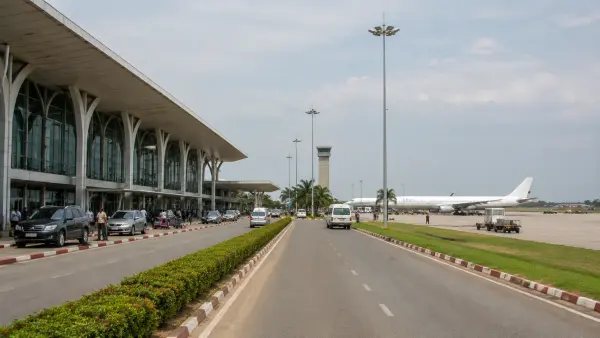
Liberia received the first group of people transferred from the United States under an agreement that could bring up to 1,200 third-country nationals to the West African country over a year. Liberian authorities and international reporting said 20 people arrived at Roberts International Airport on August 20.
The arrangement is part of the U.S. administration’s wider use of third-country removals, in which people are sent to a country other than their country of citizenship. Liberia says the people transferred may seek asylum there or leave if they choose. The first arrival turns an agreement announced earlier in the week into an immediate test of how those assurances will work in practice.
Liberia says it will offer protection pathways
Information Minister Jerolinmek Piah said the agreement is based on an exchange of notes between Liberia and the United States in September 2025. FrontPage Africa reported that the Liberian government described the transfers as intended to be dignified, safe and timely, and said those arriving could include nationals from African and Western Hemisphere countries.
Liberia’s government has emphasized its history of offering refuge. The official position, as reported by local and international outlets, is that people who want to remain can apply for asylum under Liberian law, while others remain free to depart. That is the domestic case for the agreement: a humanitarian commitment accompanied by U.S. support for the logistics and migration system.
But the scale and terms have prompted questions inside Liberia. Local reporting described restricted media access at the airport, and a later FrontPage Africa report said five people reportedly refused to disembark. That report has not been independently confirmed by all outlets reviewed here, so it should be treated as a reported account rather than an established fact.
A broader U.S. migration policy reaches Liberia
AP reported that the 20 arrivals were the first under one of the largest announced U.S. arrangements for removals to a country other than a deportee’s own. U.S. officials did not provide detailed public answers about the Liberia agreement in the AP report, while describing enforcement of immigration policy as a priority.
Supporters of third-country arrangements argue that they provide an option when a person cannot be sent directly to their country of origin. Critics, including immigration lawyers cited by AP, warn that such transfers can place people in unfamiliar countries with weak practical access to legal help, family networks or durable protection. Those two views are likely to shape the debate in Liberia as well as in the United States.
El País reported in Spanish that Liberian authorities had not publicly disclosed the nationalities of the first group. That missing detail matters: a credible assessment of the policy will depend on what legal status each person receives, whether individual protection needs are assessed, and whether their rights are respected after arrival.
What to watch
Liberian authorities’ next public update should clarify how many people are being housed, whether any have applied for asylum, and what services are available while their cases are considered. It should also address the discrepancy between initial accounts of the arrival and later local reporting about people who allegedly did not leave the plane.
Over the coming weeks, the key milestones are the timing and size of any additional flights, a published account of U.S. support, and whether Liberian institutions provide accessible procedures for people seeking protection. Those details will determine whether the agreement operates as the government describes it.
Sources
- FrontPage Africa, Liberia: local account of the arrival, English.
- FrontPage Africa, Liberia: reported airport-access and disembarkation account, English.
- Associated Press, United States: arrival and policy context, English.
- Associated Press, United States: background on U.S. agreements with African countries, English.
- El País, Spain: nationalities and agreement context, Spanish.
AI assistance was used to research and draft this article. A human editor reviewed it before publication. English-language Liberian and international sources and Spanish-language reporting were checked; useful Liberian-language reporting was not accessible.