
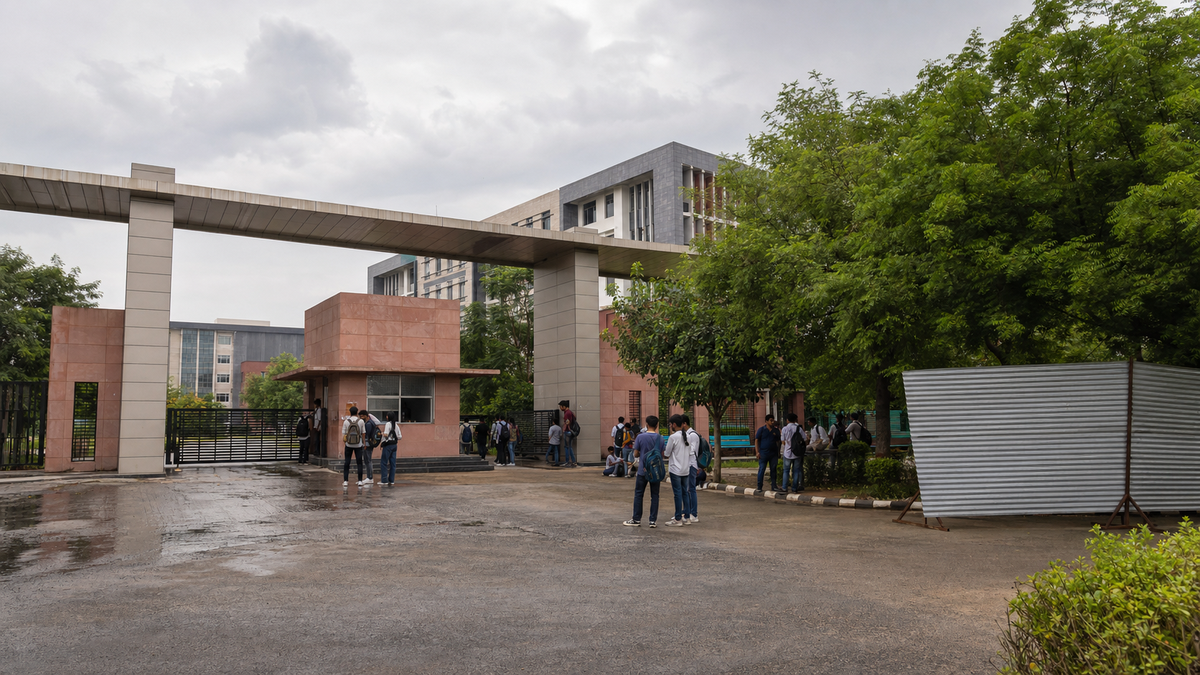
An order to demolish 38 of the 40 buildings at Mohammad Ali Jauhar University in northern India has been temporarily stayed while an administrative appeal is heard. The pause prevents immediate bulldozer action, but it does not cancel the Rampur Development Authority’s finding that most of the campus was built without approved plans.
The dispute has become a test of planning law, access to higher education and political trust in Uttar Pradesh. The university was founded by Azam Khan, a senior Muslim leader of the opposition Samajwadi Party who is currently imprisoned, and students and supporters say its destruction would punish an institution and its learners for a contested regulatory history.
Officials describe an unauthorized campus
The Rampur Development Authority, or RDA, issued its order on July 15 after concluding that 38 buildings lacked approved plans. District Magistrate Ajay Kumar Dwivedi, who also serves as the authority’s vice-chairman, directed the Mohammad Ali Jauhar Trust to remove the structures within 15 days.
The Indian Express reported that only a medical college building and an academic block had approved plans. The authority said the trust knew approval was required because it had obtained permission for those two buildings.
The university disputes that reasoning. It argues that the campus was developed before the RDA’s jurisdiction expanded to include Singhankhera village and that officials did not adequately consider its records. In a later Indian Express examination, Khan’s wife, Tazeen Fatima, said the village entered the authority’s jurisdiction only in September 2024.
Jauhar University was created through a 2006 act of the Uttar Pradesh legislature and was officially recognized by the state in 2012. Creation by statute does not automatically approve every building, but supporters say the institution’s long public operation makes wholesale demolition a disproportionate remedy.
The stay is limited and the legal routes differ
Moradabad divisional commissioner Anjaneya Kumar Singh granted an interim stay on July 27 after the trust appealed the RDA order. According to the Hindustan Times account, no demolition can proceed until the next hearing in that administrative appeal.
That decision should not be confused with a final court judgment. The Allahabad High Court separately declined to entertain a petition filed by a businessman because he was not authorized to act for the university. As Oneindia reported, the dismissal concerned the petitioner’s standing, not a ruling that either the demolition order or the university’s buildings were lawful.
The trust has pursued its own legal challenge, and the administrative appeal remains active. The distinctions are important: the RDA order still exists, the commissioner’s stay suspends action, and the merits of the planning dispute have not been finally resolved.
Students see education at risk
Students and alumni began an indefinite sit-in outside the campus gate after the demolition order. They argue that losing nearly the entire campus would disrupt degrees, employment and educational access in Rampur. The Indian Express documented their protest, while university administrators welcomed the stay as temporary relief.
The All India Muslim Personal Law Board called the order vindictive and unjust, saying the consequences would fall on students. Opposition politicians have made similar claims. Those statements express a political and community interpretation; they do not by themselves resolve whether the buildings violated planning law.
Officials and supporters of the governing Bharatiya Janata Party point to a wider history of land and regulatory cases connected to Khan and the university. Khan has faced numerous criminal and civil proceedings, including land-related allegations. The university’s defenders respond that action against an individual should not become collective punishment of a functioning educational institution.
Why the case attracts attention beyond Rampur
Indian debate over demolition has grown because authorities in several states have used bulldozers against homes and businesses linked to accused people, sometimes before courts have determined guilt. In July, a split Allahabad High Court decision on broader demolition safeguards was referred to a larger bench, according to ThePrint’s legal report.
The Jauhar case is not identical to a punitive residential demolition. Here, the stated basis is the absence of approved campus plans and the trust has access to statutory appeal. Yet the scale, the institution’s Muslim identity and Khan’s opposition role have made selective enforcement part of the public argument.
International coverage has emphasized minority education and the political meaning of bulldozers under Uttar Pradesh Chief Minister Yogi Adityanath. Domestic reporting provides more detail about jurisdiction, plan approvals and the separate proceedings. Both perspectives are necessary to distinguish a serious discrimination concern from facts that the pending appeal still must decide.
What to watch
The immediate milestone is the next hearing before the Moradabad divisional commissioner. The authority and trust are expected to present records about when planning jurisdiction applied, which approvals were sought and whether regularization is legally possible.
Watch also for a properly constituted High Court petition, a negotiated regularization plan or a fresh order modifying the number of buildings at risk. Until one of those steps occurs, the campus is protected from immediate demolition but remains under an unresolved order.
Sources
- The Indian Express, India: RDA order, plan approvals and official reasoning, English.
- Hindustan Times, India: commissioner’s interim stay and appeal, English.
- Amar Ujala, India: domestic Hindi-language coverage of the stay.
- Al Jazeera, international/India: students, university history and minority-rights framing, English.
- ThePrint, India: wider legal dispute over demolition safeguards, English.
This article was prepared with AI assistance and human editorial review. English- and Hindi-language Indian and international reporting was checked.