
Brazil’s Workers’ Party formally nominated President Luiz Inácio Lula da Silva for reelection on August 2, setting up an October contest in which domestic economic choices and unusually direct foreign political involvement are becoming intertwined. Vice President Geraldo Alckmin will again run alongside Lula.
The 80-year-old president is entering his seventh presidential race and seeking a fourth nonconsecutive term. His principal rival, Senator Flávio Bolsonaro, has received public backing from political figures outside Brazil, while Lula and his allies have made national sovereignty and protection of the electronic voting system central campaign themes.
Brazil’s campaign turns toward sovereignty
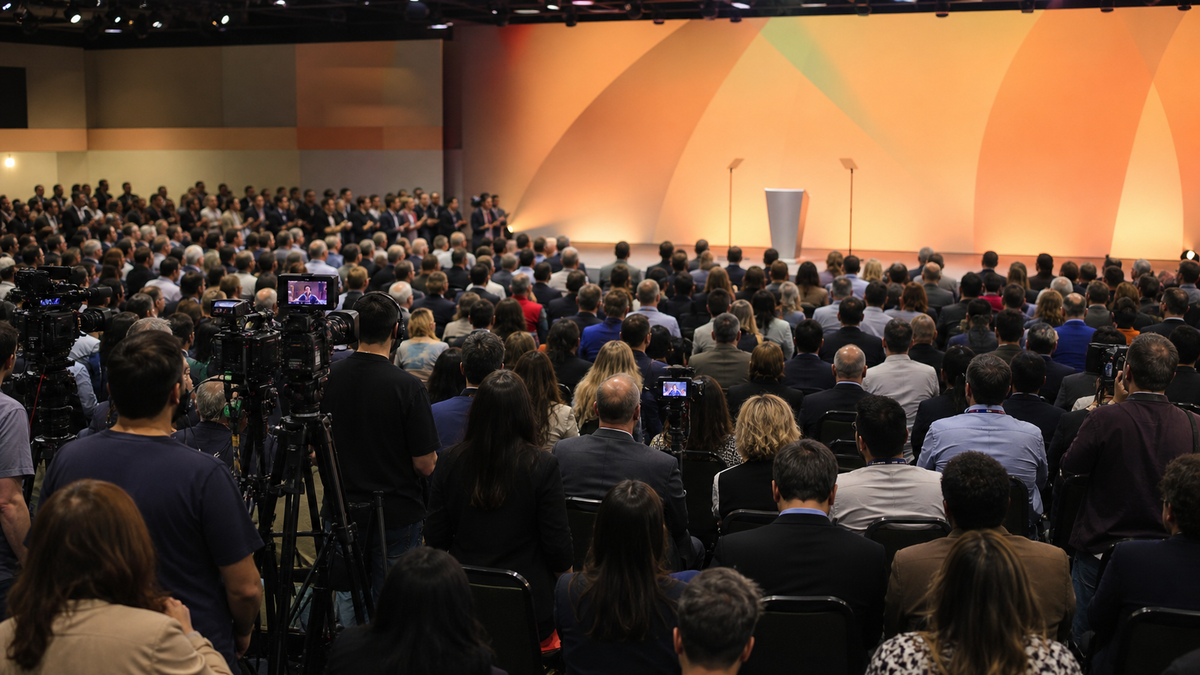
At the São Paulo convention, Lula promised a more assertive development strategy, including support for Brazil’s defense industry and national control over rare minerals. The Associated Press reported that Lula said foreign powers would not gain access to those resources without respecting Brazilian sovereignty.
The convention completed the party choice, but it did not yet place Lula formally on the ballot. Under the electoral calendar published by Brazil’s Superior Electoral Court, parties have until August 15 to register candidates. General street and online campaigning begins August 16, and the first round is scheduled for October 4.
The Workers’ Party has emphasized income-tax changes for lower earners, debt relief and an industrial policy tied to strategic resources. The party’s own Portuguese-language convention notice presented Lula and Alckmin as its continuity ticket. Critics, however, are expected to focus on public spending, Lula’s age, corruption allegations involving people around the government and whether the president can credibly present himself as a new choice after three previous terms.
Flávio Bolsonaro is running as the political heir to his father, former President Jair Bolsonaro, who is serving a 27-year sentence under house arrest for attempting to overturn his 2022 election defeat. International coverage by Le Monde described an artificial-intelligence-generated version of the elder Bolsonaro endorsing his son at the Liberal Party convention.
Foreign endorsements become a domestic issue
Public support for Flávio Bolsonaro has come from figures associated with US President Donald Trump’s administration, Argentine President Javier Milei and Israeli Prime Minister Benjamin Netanyahu. Endorsements alone do not establish covert interference, but Brazilian officials and Workers’ Party leaders say the combination of political pressure, trade measures and attacks on the voting system deserves scrutiny.
Milei traveled to São Paulo for Bolsonaro’s convention and insulted Lula and the Supreme Court justice who oversaw Jair Bolsonaro’s trial. Brazil then recalled its ambassador to Argentina. In a separate AP account, Lula said Brazil’s future should be decided by Brazilians without external interference.
The United States has imposed new tariffs on Brazilian exports and redesignated two Brazilian criminal groups as terrorist organizations. Those actions followed Flávio Bolsonaro’s meetings in Washington, although the US government disputes Brazilian suggestions that two State Department officials sought to undermine confidence in the election system. The difference matters: a visible foreign preference is a political fact, while an organized effort to manipulate voting or public opinion would require evidence.
Lula has challenged Trump directly on the subject. In June, the Brazilian public news agency Agência Brasil reported his message that Brazilian elections are Brazil’s responsibility, just as US elections belong to Americans. His government has also tried to strengthen relations with China and defend the Mercosur trade bloc, giving the sovereignty argument an economic as well as electoral dimension.
Brazil’s electronic voting system is part of that dispute. Jair and Flávio Bolsonaro have made unsupported claims that cast doubt on it, echoing a strategy used before the 2022 election. Alckmin used the convention to defend the system with a pointed reference to foreign leaders. The electoral court, rather than either campaign, will administer registration, voting and certification.
A national election with regional consequences
Brazil is Latin America’s largest economy, and its government influences regional trade, climate diplomacy and political coordination. Workers’ Party president Edinho Silva cast the election as a choice affecting the continent after conservative victories in several neighboring countries. That is a campaign argument, not a neutral forecast, but the competing candidates do offer sharply different ideas about Brazil’s regional alignments.
International reporting may frame the vote mainly as another contest between left and right. Inside Brazil, voters will also judge household costs, taxes, crime, social programs, government ethics and the records of two political families. Foreign involvement is therefore an important part of the campaign, but not a substitute for its domestic issues.
What to watch
The next formal milestone is August 15, the deadline for presidential and vice-presidential registration. The campaign period begins August 16, followed by free radio and television election broadcasts from August 28 to October 1.
Watch for evidence supporting or weakening claims of foreign-coordinated digital activity, as well as any court or electoral-authority action involving synthetic media or unsupported attacks on voting systems. The first round is October 4; a runoff, if required, will be held October 25.
Sources
- Associated Press, international/Brazil: convention, candidates and foreign-influence dispute, English.
- Workers’ Party, Brazil: official Lula-Alckmin convention notice, Portuguese.
- Superior Electoral Court, Brazil: official 2026 election calendar, Portuguese.
- Agência Brasil, Brazil: Lula’s response to Trump and foreign involvement, Portuguese.
- Le Monde, France: Flávio Bolsonaro’s nomination and campaign positioning, English.
This article was prepared with AI assistance and human editorial review. Portuguese-, English- and French-language Brazilian, official and international reporting was checked.