
Tens of thousands of people crossed from Morocco into the Spanish city of Ceuta in a sudden surge that overwhelmed reception services, brought soldiers into humanitarian support roles and left at least 18 people dead. Most of those arriving were believed to be Moroccan, although the scale and speed of the movement made a reliable count difficult.
Spanish security sources gave preliminary estimates of more than 40,000 arrivals over roughly 24 hours, with some estimates reaching 49,000. Those figures were not yet an official final tally when this article was prepared. Spain’s Interior Ministry told The Associated Press that it would publish its next migration report on Monday.
A sudden escalation after weeks of pressure
The mass movement on July 30 followed a sharp rise in smaller crossings, many of them by sea. Four days earlier, Ceuta’s public broadcaster reported that more than 1,000 adults and children had entered during the preceding week. Local authorities were already describing their reception system as saturated.
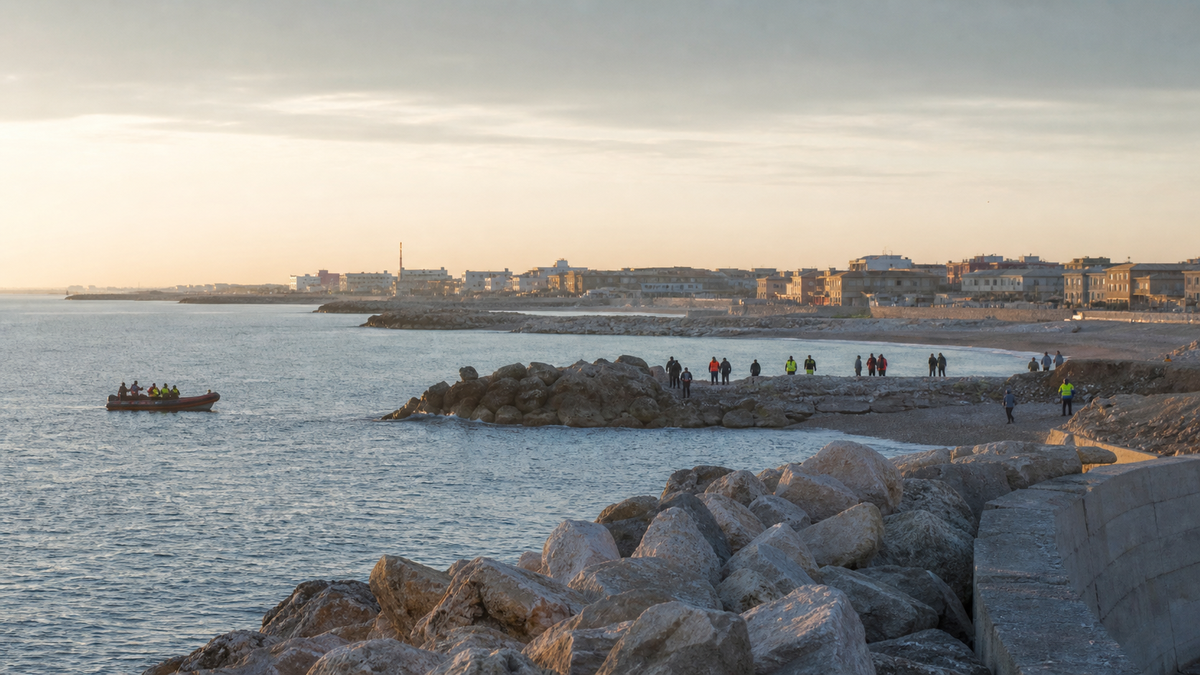
On Thursday, people moved around the Tarajal breakwater and through coastal areas separating Ceuta from the Moroccan town of Fnideq. Some swam, while others crossed through shallow water or moved on foot when the pressure at the frontier intensified. El País reported that arrivals reached an estimated 300 people an hour at some points.
The scale was extraordinary for a city with about 83,600 registered residents. Thousands slept outdoors or moved through streets because formal accommodation could not absorb them. Civil Guard representatives described personnel as focused on rescues, medical help and immediate safety while crossings continued.
At least 18 people drowned while trying to reach Ceuta, according to the toll cited by Spain’s interior minister and reported by AP. Some Spanish outlets later reported higher figures, showing how quickly the casualty count was changing. Moroccan Arabic-language outlet TelQuel had documented four deaths earlier in the week and warned that swimming attempts were already producing a mounting toll.
Spain debates security and legal responsibility
Ceuta’s regional government called the situation a humanitarian emergency and sought a stronger national response. Madrid sent additional police and military personnel, but officials said the soldiers were supporting medical, rescue and logistical work rather than taking over immigration enforcement. Prime Minister Pedro Sánchez and Interior Minister Fernando Grande-Marlaska traveled to Ceuta on July 31.
Spanish officials also pointed to a July 8 Supreme Court ruling concerning people intercepted at sea near Ceuta and Melilla. The ruling required an individual legal process before transfer to Morocco, limiting the use of immediate returns in such cases. The government argued that smuggling networks may have presented the decision as a new opportunity, but it had not demonstrated that the ruling alone caused the sudden movement.
That distinction matters because the crisis immediately entered Spain’s polarized migration debate. Border-security advocates said the ruling reduced deterrence and demanded faster returns. Migrant-rights voices emphasized the obligation to identify children, potential asylum seekers and vulnerable people individually, and warned that rapid collective returns could violate legal protections.
The surge also broke sharply with the national trend before July 30. Interior Ministry data through July 15 showed irregular arrivals to Spain down by about one quarter from the same period of 2025, even as the route into Ceuta rose by roughly 149 percent. Ceuta was therefore experiencing growing pressure before the mass crossing, but Spain as a whole was not seeing a comparable increase.
Morocco rejects the idea that it welcomed the exodus
Moroccan police deployed reinforcements near Fnideq, used water cannons and fired warning shots into the air as they tried to disperse groups, according to Moroccan rights monitors cited by AP. That response complicates claims that Rabat simply opened the border. At the same time, the scale of the crossing raised renewed questions in Spain about whether bilateral controls had failed and how quickly Moroccan authorities reacted.
Morocco’s ambassador to Spain, Karima Benyaich, said the situation did not please her government and that Morocco wanted its citizens who had entered Ceuta to return. Cadena SER reported her remarks as thousands were still crossing. Large groups later began walking back toward Morocco voluntarily while others continued trying to enter.
Ceuta remains politically sensitive. Spain administers Ceuta and nearby Melilla as autonomous cities, while Morocco claims both territories. The two governments also depend on one another for policing migration, moving seasonal travelers and maintaining trade, making border management part of a much wider relationship.
Why Europe is watching
Ceuta is Spanish and European Union territory on the North African coast. A person who reaches the city has entered Spain, but does not automatically receive asylum, legal residence or unrestricted travel to mainland Europe. Authorities still have to determine identity, age, protection claims and whether return is lawful.
The crisis tests whether that processing can occur when arrivals vastly exceed local capacity. It also places pressure on Spain’s system for relocating unaccompanied minors and on its ability to transfer eligible adults to facilities on the mainland. European governments will watch closely because cooperation with neighboring states is central to the EU’s wider border strategy.
Le Monde emphasized the risk that the emergency could revive diplomatic tension between Madrid and Rabat. That outcome is not inevitable: both governments publicly supported returns and tighter control. The practical test will be whether they agree on safe, lawful procedures while accounting for the missing, injured and dead.
What to watch
The first milestone is Spain’s next official migration report, expected Monday, August 3. It should clarify how many people actually entered, how many returned to Morocco, the number of minors identified and whether the preliminary estimates above 40,000 withstand verification.
Authorities must also update the death and missing-person counts. The difference between confirmed bodies recovered, people reported missing and preliminary media totals should become clearer as Spanish and Moroccan rescue services compare records.
The longer-term question is whether crossings fall after Morocco’s reinforcements and how Spain applies the Supreme Court ruling. Watch for a formal Spain-Morocco coordination agreement, transfers from Ceuta to mainland reception centers and any court challenges involving returns from the maritime border.
Sources
- Associated Press, United States, deaths, border response and provisional count status.
- El País, Spain, preliminary arrival estimates and conditions in Ceuta, Spanish.
- RTVCE, Ceuta, preceding rise and local emergency planning, Spanish.
- Cadena SER, Spain, Moroccan ambassador’s position, Spanish.
- Spanish Interior Ministry, Spain, official migration reports, Spanish.
- TelQuel Arabi, Morocco, earlier deaths and swimming-route risks, Arabic.
- Le Monde, France, diplomatic and European context.
This article was prepared with AI assistance and reviewed by a human editor. English-, Spanish- and Arabic-language sources were checked.