
The United States imposed new tariffs of 10 percent or 12.5 percent on imports from 60 economies on July 24, saying those trading partners had not adequately barred goods produced with forced labor from entering their own markets. The list covers major US partners including the European Union, China, India, Japan, South Korea, Australia and Singapore.
The measure took effect as a temporary 10 percent global tariff expired. It uses Section 301 of the Trade Act of 1974, a law that allows the United States to respond to foreign practices it finds unreasonable or discriminatory and burdensome to US commerce. That change in legal authority has become almost as contentious as the forced-labor policy itself.
Washington presents labor enforcement as trade policy
The US Trade Representative said its investigations included two rounds of public hearings, more than 2,100 public comments and direct engagement with trading partners. USTR argues that countries which fail to block forced-labor goods gain an unfair advantage over American producers and weaken efforts to remove exploitation from global supply chains.
The tariff rate depends broadly on what USTR concluded about each economy’s laws and enforcement. Le Monde summarized the division as 10 percent for economies that have prohibitions but do not enforce them effectively enough in Washington’s view, and 12.5 percent for those without an adequate prohibition.
Not every product is covered. The official USTR fact sheet exempts some raw materials that are unavailable domestically, products that could cause economy-wide disruption, goods the United States cannot produce in sufficient quantities, and items whose inclusion would do little to change the targeted practice. Certain products from economies that made labor-related commitments also received exemptions.
US agreement on forced labor stops at the tariff
Within the United States, the argument is not simply between people who oppose forced labor and people who favor tariffs. Human-rights advocates, importers, lawmakers and legal groups largely accept the underlying problem but disagree sharply about whether broad duties on mostly lawful trade are a credible remedy.
Martina Vandenberg, president of the Human Trafficking Legal Center, told the Associated Press that import bans can be useful in fighting forced labor. But a civil-society statement submitted to USTR by her organization and partners argued that the government should begin with cooperation, enforcement assistance and support for workers and civil society, particularly in countries with fewer resources. The groups said targeted import restrictions are more likely than blanket tariffs to improve conditions.
That distinction matters because US law already allows Customs and Border Protection to stop specific goods suspected of being made with forced labor. Supporters of targeted enforcement say it connects the economic penalty more directly to a product, producer or supply chain. The new policy instead applies additional duties across large shares of trade with an entire economy, including goods for which no forced-labor connection has been alleged.
Democratic critics have attacked both the method and the administration’s motives. Representative Linda Sánchez said the policy did not show that President Donald Trump was serious about combating forced labor, while Senator Kirsten Gillibrand argued that continuing tariffs would make everyday goods less affordable. Their criticism reflects a broader Democratic case that labor rights should be enforced through specific trade rules without passing diffuse costs to US consumers.
Importers and retailers focus on those costs. The Associated Press reported that import volumes at major US container ports were forecast to reach a record in July as retailers brought goods in before expected tariff increases. Businesses generally pay tariffs when goods enter the country, leaving them to absorb the charge, seek cheaper suppliers or raise prices.
A separate objection is constitutional and statutory. The Liberty Justice Center, a libertarian legal organization, filed a case in the US Court of International Trade on behalf of importers including Burlap & Barrel and Collective Horology. Its challenge argues that Section 301 does not give the administration a blank check to impose near-uniform tariffs on lawful goods without showing how each duty will change the specific foreign practice under investigation.
The White House sees that breadth as leverage rather than a flaw. An administration official told CBS News that forced-labor imports create both a human-rights problem and an economic disadvantage for US firms operating under stronger rules. The official also emphasized negotiation, indicating that countries may be able to secure relief by changing their laws or enforcement.
Allies reject Washington’s country-level judgments
Several governments objected not only to the cost but to the suggestion that they tolerate forced-labor trade. Japan said its rules and industry practices conform with international standards. Australia called the tariff unjustified, while Singapore said it would continue engaging USTR and noted that about one-third of its domestic exports to the United States would face the 12.5 percent duty.
Singapore’s trade ministry said it had already strengthened its forced-labor framework and asked Washington to explain how the country had been assessed. That response illustrates the international dispute at the center of the policy: the United States is judging whether another economy adequately keeps forced-labor goods out of its market, not necessarily alleging that the economy’s own export factories use forced labor.
China said tariff and trade wars do not serve any party’s interests. European governments face a different version of the argument because the EU has adopted its own forced-labor product ban but is still building the system needed to apply it. Washington’s position is that having a law is insufficient without effective enforcement; European critics question whether a broad US tariff measures that enforcement accurately.
What to watch
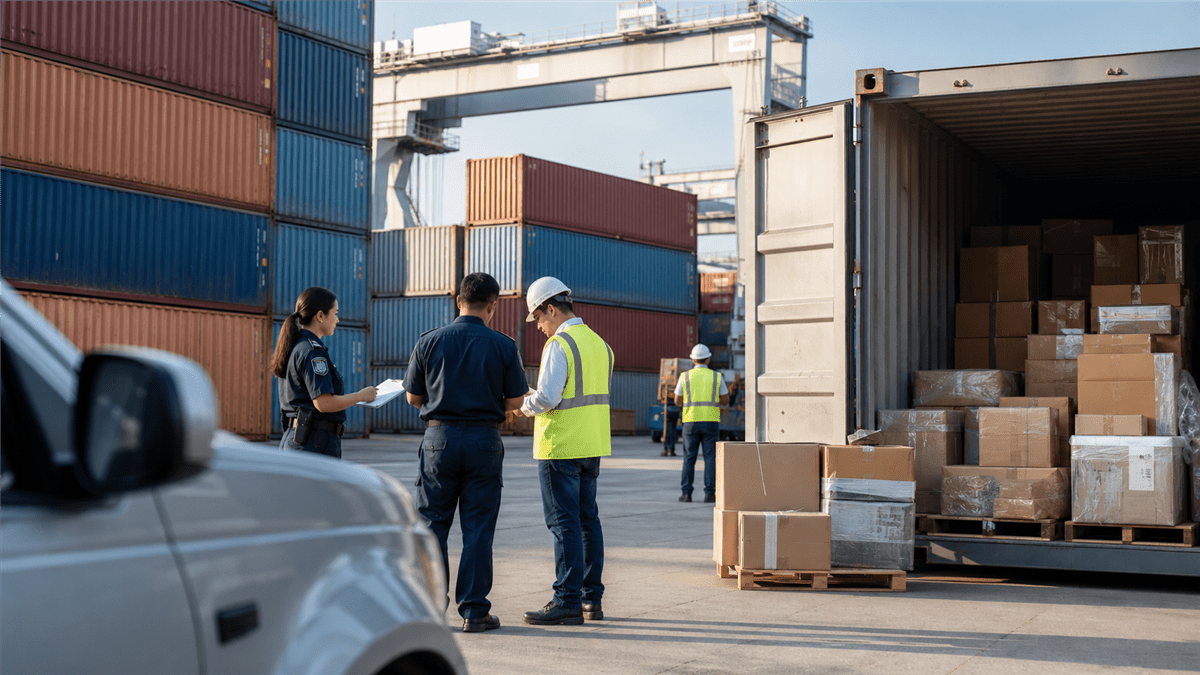
The first test will be implementation at US ports. Importers will need to determine which products qualify for exemptions and how the new duties interact with existing sectoral tariffs. Price changes will take longer to measure because some retailers stocked up before July 24 and may initially sell goods imported under earlier rates.
The second test is diplomatic. USTR can use exemptions and negotiations to reward countries that adopt or enforce forced-labor import bans. Concrete changes in partner-country law, customs investigations or product seizures would provide evidence that the policy is affecting labor enforcement rather than simply replacing tariff revenue lost when the previous measure expired.
The most immediate named milestone is the Court of International Trade’s handling of Burlap & Barrel, Inc. v. Greer, including any request to suspend the tariffs while the case proceeds. Watch also for USTR exemption notices, formal responses from the EU and Asian allies, and US inflation and import data beginning in August that may show whether businesses are absorbing or passing on the new costs.
Sources
- US Trade Representative (United States, English, official): final action, investigation process and policy rationale.
- US Trade Representative fact sheet (United States, English, official): tariff rates and product exemptions.
- Associated Press (United States, English): US political and legal disagreement and responses from affected governments.
- Associated Press (United States, English): consumer, importer and revenue implications.
- Human Trafficking Legal Center and partners (United States, English): civil-society recommendations for targeted enforcement and international capacity-building.
- Liberty Justice Center (United States, English): importer lawsuit challenging the Section 301 action.
- Singapore Ministry of Trade and Industry (Singapore, English, official): domestic export exposure and response to the US finding.
- Le Monde (France, English translation from French): European framing of the tariff levels and legal transition.
This article was prepared with AI assistance and reviewed by a human editor. English- and French-language sources were checked, including US government documents, American reporting and advocacy material, a Singapore government response, and French coverage of the international trade dispute.