
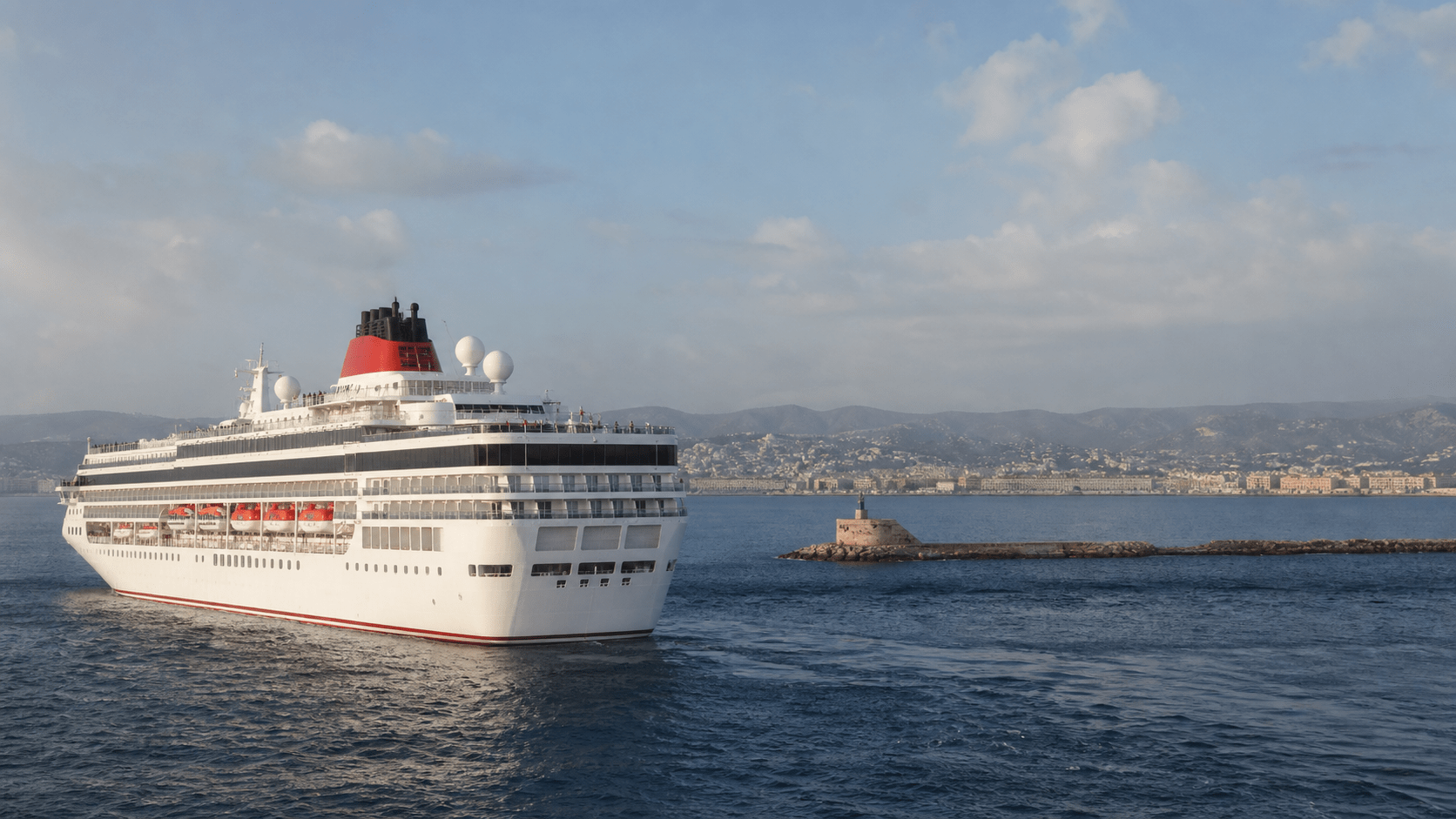
A cruise chartered for LGBTQ passengers lost access to ports in two countries during the same Mediterranean voyage. Turkey canceled planned calls at Kusadasi and Istanbul before the ship sailed, explicitly invoking social and moral values. Egypt then withdrew permission for the replacement stop in Alexandria as the ship approached, but Egyptian authorities have not publicly stated why.
The Scarlet Lady, operated by Virgin Voyages and chartered by LGBTQ travel company Atlantis Events, left Athens on July 5 for a ten-night voyage ending in Trieste on July 15. Nearly 2,000 passengers were aboard, according to the operator. The original itinerary included three days in Turkey; after those calls were blocked, Atlantis added Alexandria and Crete, only for the Egyptian stop to disappear hours before arrival.
Turkey gave a reason
Turkey’s decision became public on June 28 after discussion of the cruise spread through Turkish media and social platforms. In a written statement reported by the Turkish news agency Demiroren Haber Ajansi, Aydin governor Osman Varol said the July 7 Kusadasi call had been canceled after causing concern among parts of the public. The statement described the chartering group in terms of conduct that authorities said did not fit the structure or moral values of Turkish society.
The governor’s office stressed that the decision applied to one event and did not affect other cruise tourism in Kusadasi. That qualification framed the ban as a response to the identity and character of the charter rather than a general port or security restriction. Atlantis chief executive Rich Campbell said his company had brought groups to Turkey more than a dozen times over roughly 25 years, including a visit the previous year, without a comparable refusal.
Atlantis replaced Kusadasi and Istanbul with a full day in Alexandria and a call in Crete. Its public itinerary update said Turkish authorities would not permit the ship to dock, while continuing to display the original Turkish schedule lower on the page. The mismatch captured how late the route had changed.
Egypt did not publicly explain
Alexandria was meant to give passengers access to Cairo and the Grand Egyptian Museum on July 9. Instead, Atlantis told passengers during the night that the Scarlet Lady had been denied entry to Egyptian waters and that the company was urgently seeking another port. Campbell said permission was withdrawn on approach, after local tours had been sold and arrangements made.
Unlike Turkey, Egypt had issued no public explanation by July 12. That absence is important: it is reasonable to report the sequence and the operator’s belief that the LGBTQ charter was the issue, but it is not possible to attribute Turkey’s stated rationale to Egyptian officials. Egyptian outlets including Al-Masry Al-Youm and Masrawy reported the refusal and the lack of an official reason, largely drawing on statements from the company and international coverage.
Virgin Voyages said a similar itinerary had operated successfully the previous year. The ship was redirected toward Crete and Kotor, Montenegro, adding more time at sea and canceling tours that passengers had booked in Egypt.
How the story traveled
Coverage inside Turkey centered the Aydin governor’s statement and the claim that the visit had generated public discomfort. The statement also defended Kusadasi’s continuing cruise business, separating the rejected charter from ordinary tourism. Arabic-language coverage in Egypt was more procedural because officials supplied no rationale: reports focused on the late denial, the passenger count and the earlier Turkish decision.
International coverage placed the episode in an LGBTQ rights and travel context, relying heavily on Atlantis, Virgin Voyages and passengers because Egypt did not comment. A Local 10 video interview showed passenger Joshua New describing anger and disbelief aboard the ship, as well as why some travelers choose an LGBTQ-focused charter to feel comfortable while abroad. The Washington Post traced the ship’s turn away from Alexandria and reported that 1,200 local tours had been sold.
The passengers were denied port access, not detained, and the ship continued to alternative destinations. That distinction does not erase the discriminatory language in Turkey’s explanation, but it does define the event accurately. It was an exclusion from national waters and ports that disrupted a commercial itinerary, not an onboard raid or an interruption of the vessel’s ability to continue sailing.
What to watch
The first unanswered question is whether Egypt will give an official reason. A port can refuse a call for operational, security or administrative reasons, but none had been publicly cited in this case as of July 12. A statement from Egyptian port, tourism or national authorities would show whether the Alexandria decision was explicitly connected to the charter’s LGBTQ identity or rested on another ground.
The second question is how cruise operators respond when destinations reverse previously accepted calls. Atlantis and Virgin Voyages may reconsider future Turkey and Egypt itineraries, while other specialist travel companies will be watching whether the two refusals remain isolated or influence port approvals elsewhere. The episode also leaves local tour operators absorbing cancellations after bookings and transport plans had already been arranged.
Next specific milestones: any Egyptian government explanation for the Alexandria refusal; the Scarlet Lady’s scheduled calls at Dubrovnik on July 13 and Zadar on July 14; the voyage’s arrival in Trieste on July 15; compensation or refund decisions for canceled excursions; and any route-policy changes announced by Atlantis Events or Virgin Voyages.
Sources
- Demiroren Haber Ajansi (Turkey, Turkish-language news agency), the Aydin governor’s statement and rationale for canceling the Kusadasi visit
- Atlantis Events (United States, cruise organizer), original and revised voyage details and confirmation of the Turkish port refusals
- Al-Masry Al-Youm and Masrawy (Egypt, Arabic-language news outlets), local coverage of the Alexandria refusal and absence of an official explanation
- The Washington Post (United States, national newspaper), operator and cruise-line statements, tracking information and canceled tour details
- The Guardian (United Kingdom, national newspaper), passenger notices, rerouting and the international LGBTQ travel response
- WPLG Local 10 (United States, regional television station), video interview with a passenger aboard the Scarlet Lady
This post was produced with AI assistance and human editorial review. Turkish- and Arabic-language coverage was reviewed alongside company statements and English-language international reporting.